
How to Reduce Dining Costs at Beach Resorts: The 2026 Audit
The economic structure of the modern beach resort is built upon the principle of “Captured Audience Monetization.” Once a traveler crosses the threshold of a high-end coastal property, their elastic demand for sustenance typically hardens into a rigid necessity. Resorts leverage this geographic isolation, utilizing a sophisticated decoupling of the room rate from the “Cost of Presence.” While the headline price of a suite may appear competitive, the secondary economy of $18 cocktails and $45 club sandwiches is where the property’s true profit margins are realized.
Navigating this fiscal environment requires a transition from the “Vacationer” mindset to that of a “Logistics Architect.” The high cost of resort dining is rarely a reflection of ingredient quality; rather, it is a premium paid for the logistical convenience of proximity and the overhead of maintaining beachfront real estate. To achieve significant savings without degrading the sensory quality of the stay, one must deconstruct the resort’s revenue traps and identify the “Leakage Points” where capital can be preserved through preparation, external sourcing, and temporal arbitrage.
This editorial reference examines the systemic drivers of high-margin hospitality catering and provides a definitive framework for achieving fiscal autonomy at the water’s edge. By understanding the “Caloric Governance” of a resort stay—from the psychology of the “In-Room Mini-Bar” to the “Radius of Pricing Arbitrage” in local coastal towns—the traveler can maintain a high-utility lifestyle while significantly reducing the total cost of the experience. The goal is to move from a state of passive consumption to one of calculated environmental mastery.
Understanding “how to reduce dining costs at beach resorts”
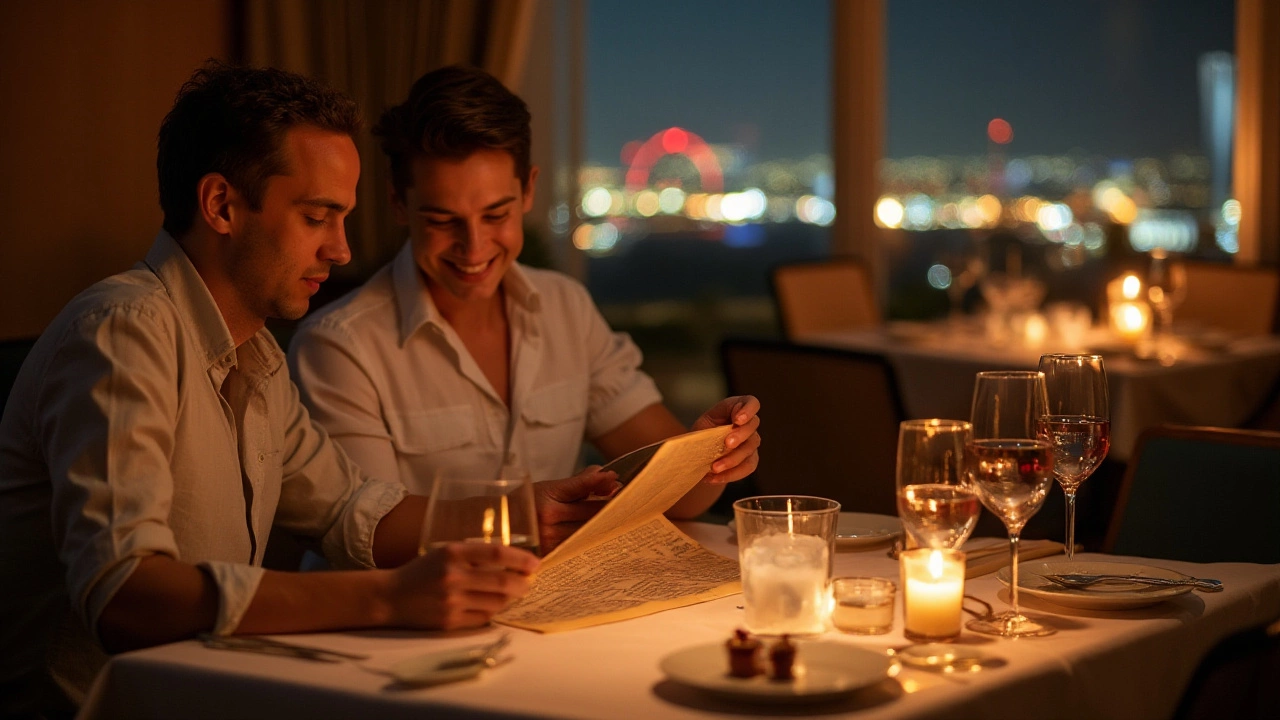
To master how to reduce dining costs at beach resorts, one must first recognize the “Convenience Premium” that defines resort pricing. This is not merely an overcharge; it is a calculated tax on the guest’s lack of mobility. A common misunderstanding is that “All-Inclusive” models are the only way to control costs. In reality, these packages often force the guest to subsidize high-volume alcohol consumption or expensive buffet infrastructure they may not fully utilize. The oversimplification risk here is assuming that “eating less” is the solution. A professional strategy focuses instead on “Source Diversification”—ensuring that not every calorie consumed is purchased at a 400% markup from the property’s primary kitchen.
From a multi-perspective view, the “Dining Cost” is a variable that fluctuates based on “Temporal Positioning.” The price of a meal at 1:00 PM at a poolside grill is often higher than a more substantial meal at 4:00 PM during a “Happy Hour” or “Early Bird” window. Resorts rely on the guests’ biological clocks to drive them toward high-margin menu items. By shifting consumption patterns slightly outside of peak demand windows, the traveler can access the same culinary infrastructure at a lower “Yield Rate.” This requires a decoupling of social norms from nutritional logistics.
Furthermore, we must account for the “Liquid Leakage.” In many coastal resorts, the cost of hydration and social drinking can equal or exceed the cost of solid food. The “Hidden Resort Parking Fees” of the dining world are the $9 bottles of mineral water and the automatic 20% “Service Charge” that is often applied before the guest even sees the menu. An authoritative management plan treats fluids as a “Primary Logistics Variable,” ensuring that bulk water and premium spirits are sourced externally before the “Capture Phase” of the stay begins.
Historical and Systemic Evolution of Resort Ancillary Revenue
The transition of resort dining from a “Hospitality Service” to a “Profit Engine” began in the post-war era of the 1950s. Early grand hotels often included meals as part of a “Full Board” or “American Plan,” where the focus was on retaining guests within the social fabric of the hotel. However, as global travel democratized in the 1980s, hotel chains realized that unbundling the room rate allowed them to appear more competitive on nascent booking systems. This led to the “Ancillary Revenue Revolution,” where the room became the “Loss Leader” and the dining room became the “Cash Cow.”
Systemically, the rise of “Yield Management” software in the 2000s allowed resorts to price menus dynamically based on occupancy and local competition. If a resort is located in an area with no external restaurants within walking distance, the software identifies this “Geographic Monopoly” and raises prices accordingly. By 2026, this has evolved into “Personalized Pricing,” where digital menus can be adjusted in real-time. This historical trajectory means the traveler is no longer just a guest; they are a data point in a high-frequency trading environment for calories.
The evolution of the “Resort Fee” has also complicated this landscape. Many properties now include a “Daily Credit” for food and beverage as part of a mandatory fee. This is a “Sunk Cost Trap” designed to ensure that the guest spends at least some time—and usually significantly more money—at the on-site bars. Understanding this history allows the traveler to see the “Complimentary Appetizer” not as a gift, but as a “Loss Leader” designed to trigger a $150 dinner spend.
Conceptual Frameworks and Mental Models
To survive the predatory pricing of beach resorts, one must apply specific mental models that deconstruct the “Dining Value Chain.”
1. The “Radius of Arbitrage.e”
This model suggests that the price of a calorie drops by approximately 15% for every 500 meters one moves away from the resort’s high-value “Beachfront Zone.” By identifying a local grocery store or an “Off-Plot” cafe just outside the resort’s perimeter, the traveler can engage in “Spatial Arbitrage,” capturing the same coastal environment with a vastly lower “Maintenance Cost.”
2. The “Caloric Sovereignty” Framework
This framework views the ability to prepare even one meal a day as a “Strategic Reserve.” If a traveler can manage “Breakfast Sovereignty”—using a room’s coffee maker, a portable frother, and locally sourced fruit—they effectively eliminate 33% of the resort’s capture opportunities. The mental model here is to treat the resort kitchen as a “Luxury Supplement” rather than a “Primary Utility.”
3. The “In-Room Inventory” Model
This treats the hotel room as a “Forward Operating Base.” Just as a logistics manager stocks a warehouse, the traveler stocks the room with “High-Utility Assets”: bulk water, premium snacks, and shelf-stable proteins. The goal is to avoid the “Decision Fatigue” that leads to a $30 late-night room service order because of a lack of immediate options.
Key Categories of Resort Dining and Strategic Trade-offs
Identifying the type of dining offered allows for a “Portfolio Approach” to cost management.
| Category | Typical Margin | Strategic Benefit | Mitigation Strategy |
| Poolside Grill | 500% – 800% | High convenience; “Seen and be seen.en” | Pre-load with a heavy late breakfast. |
| Signature Fine Dining | 300% – 400% | High aesthetic/sensory value | Limit to one “Anchor Event” per stay. |
| Breakfast Buffet | 1000%+ | High volume; social hub | Use “Status” (Gold/Platinum) for waivers. |
| Grab-and-Go Market | 400% | Speed; appears “Cheap.” | Avoid; usually higher per-ounce cost. |
| Room Service | 600% + Fees | Maximum privacy/comfort | Utilize a “Delivery App” in the lobby. |
Decision Logic: If the “Convenience Value” of a poolside lunch (saving 60 minutes of travel to an off-site location) is worth less than the hourly professional rate of the traveler, they should stay on-site. If not, the “Arbitrage Walk” is the high-yield choice.
Detailed Real-World Scenarios
The “Continental Breakfast” Failure
A traveler stays at a resort where the breakfast buffet is $45 per person.
-
The Flaw: They attend every morning for the “social atmosphere.”
-
The Outcome: A $630 expense over 7 days for two people, largely for eggs and coffee.
-
The Resolution: They switch to a “Boutique Coffee” strategy, using a high-quality portable travel press and sourcing pastries from a local bakery 1km away. Savings: $500+.
The “Liquid Leakage” Trap
A family of four spends the day at the beach, ordering four bottles of water and two sodas every two hours.
-
The Flaw: Relying on the “Beach Attendant” for hydration.
-
The Outcome: A daily “Water Bill” of $80, plus 20% gratuity.
-
The Resolution: They purchase two 5-liter jugs at a local pharmacy for $4 and use insulated flasks. Savings: $500 over a 7-day stay.
The “Delivery App” Pivot
A traveler wants a quiet dinner on their balcony but doesn’t want to pay the $15 “Delivery Fee” and $40 entree price of Room Service.
-
The Strategy: They use a local food delivery app to order from a high-rated local seafood shack 3 miles away.
-
The Result: The food is higher quality (local vs. resort-institutional), arrives at the lobby for $25 total, and is eaten on the same balcony. Savings: $60 per night.
Planning, Cost, and Resource Dynamics
The “Fiscal Leakage” of dining is often the difference between a trip that is sustainable and one that causes “Post-Vacation Stress.”
Range-Based Operational Estimation (7-Day Vacation / 2 People)
| Strategy | Direct Cost (Food) | Indirect Cost (Prep Time) | “Luxury” Utility |
| Pure Resort Dining | $2,100 – $3,500 | 0 Hours | 10/10 |
| Hybrid (Resort + Off-site) | $900 – $1,500 | 4 Hours (Travel) | 8/10 |
| High-Efficiency (Sovereign) | $400 – $700 | 10 Hours (Shopping/Prep) | 6/10 |
Opportunity Cost: The time spent traveling to a supermarket or researching local eateries must be weighed against the “Relaxation Value” of the vacation. A professional strategy seeks the “Efficiency Sweet Spot” where 80% of the savings are captured with 20% of the logistical effort (The Pareto Principle applied to resort dining).
Tools, Strategies, and Support Systems
To maintain an authoritative defense against dining inflation, the following “Caloric Tech Stack” should be deployed:
-
Google Maps “Radius Search”: Before booking, search for “Bakery,” “Pharmacy,” and “Grocery” within a 2km radius. If none exist, the resort is a “Captured Market.”
-
Local Delivery Apps (Uber Eats, Glovo, Grab): Check if they serve the resort’s lobby. This is the ultimate “Shadow Menu” for any property.
-
Insulated Soft-Coolers: A collapsible cooler in your luggage allows you to keep “External Assets” (beverages/dairy) at the beach without drawing attention.
-
Loyalty Program “F&B” Credits: Many credit cards and hotel tiers offer $25-$50 daily credits. Use these strictly for the “High-Yield” items (Signature Cocktails) while self-sourcing the “Low-Yield” items (Water/Toast).
-
The “Resort Fee” Audit: Read the fine print. If the resort fee includes a “Complimentary Wine Hour” or “Daily Snack,” build your schedule around these “Sunk Cost” events.
-
Portable Induction or Kettle: In “Self-Catering” villas, these are standard, but in hotel rooms, a high-quality travel kettle allows for premium “In-Room” tea and coffee that surpasses the instant packets provided.
-
Social Media Geotags: Check Instagram/TikTok for “Secret Menus” or “Happy Hour” signs posted by other guests. Resorts rarely advertise their cheapest options.
-
Zoning for “Food Trucks”: Many high-end beach areas have “Designated Food Truck Zones” just 5-10 minutes away. These offer the same ocean views with “Street Price” logistics.
Risk Landscape and Failure Modes
Reducing costs in a luxury environment is a high-stakes game. A failure in the plan can lead to “Aesthetic Friction” or health risks.
-
The “Penny-Wise” Failure: Spending two hours of a $5,000 vacation to save $20 on a sandwich. This is a failure of “Utility Logic.”
-
The “Security Breach” (Food Safety): Sourcing “Off-Plot” food in developing coastal regions without vetting. A $10 saved meal that leads to a $2,000 medical bill is a catastrophic failure.
-
The “Aesthetic Clash”: Eating “Sovereign” meals in a way that creates tension with a partner who expects the “Full Resort Experience.” Cost management must be a shared “Strategic Objective.”
-
The “Corkage Trap”: Bringing your own wine to a resort restaurant. Many properties charge $30-$75 in “Corkage Fees,” negating the savings. Drink your “Sovereign Assets” on your private balcony instead.
Governance, Maintenance, and Long-Term Adaptation
A successful dining strategy requires “Daily Operational Reviews” to adapt to the resort’s shifting environment.
-
Daily Review: Check the “Daily Activities” sheet. Often, resorts host “Manager’s Receptions” or “Tastings” that provide high-value calories for “free” (paid via your resort fee).
-
Adjustment Triggers: If the “Wait Time” for the resort’s “Cheaper” cafe exceeds 45 minutes, the “Opportunity Cost” has spiked. Trigger the “Delivery App” or “Off-site” backup plan immediately.
-
Layered Checklist:
-
Pre-Arrival: Map out the “Supply Radius.”
-
Day 1: Execute the “Initial Stocking Run” (Water/Snacks/Breakfast).
-
Day 3: Audit the “Food Credit” balance. Ensure it is being used for high-margin “Treats” rather than base-level hydration.
-
Measurement, Tracking, and Evaluation
How do we measure the success of a “Dining Mitigation Plan”?
-
Leading Indicator: “Daily Food Spend vs. Room Rate.” A high-efficiency plan keeps this under 30%. A “Captured” guest often sees this at 70-100%.
-
Lagging Indicator: “Total Ancillary Bill at Checkout.”
-
Documentation Example:
-
“Budgeted $200/day for F&B.”
-
“Actual $110/day (By self-sourcing breakfast and beach water).”
-
“Result: $630 re-allocated to a high-value excursion (Private Boat).”
-
Common Misconceptions and Oversimplifications
-
Myth: “The supermarket is always cheaper.” Correction: In remote islands (Maldives/Seychelles), “Off-Plot” supermarkets can be more expensive than resort buffets due to a lack of bulk purchasing power.
-
Myth: “Room service is for the lazy.” Correction: Room service entrees are often the same price as the restaurant, but you save on the “Social Multiplier” (ordering extra drinks/sides you don’t need).
-
Myth: “Street food is dangerous.” Correction: High-turnover street food in beach towns is often fresher than “Holding-Tray” resort buffets.
-
Myth: “Drinking water from the tap is okay if you boil it.” Correction: In many coastal resorts, tap water is desalinated and lacks essential minerals or has high “Salt Creep,” leading to dehydration. Stick to bulk-bought mineral water.
-
Myth: “Happy Hour is for cheap drinks.” Correction: Happy Hour is a “Psychological Anchor” to keep you on-site for the expensive dinner that follows. Drink the happy hour cocktail, then leave for the local bistro.
Ethical and Practical Considerations
There is a socio-economic dimension to “Captive Dining.” When travelers exclusively eat at the resort, the local community often sees zero benefit from the tourism. A “Professional Cost Strategy” that involves eating “Off-Plot” at local, family-owned shacks is not just a budget move—it is a form of “Direct Impact Tourism.” It ensures that your capital supports the local ecosystem rather than just the corporate headquarters of a global hotel chain. Practically, this also provides a more “Authentic” sensory experience, as resort food is often “Sanitized” for a global palate, whereas local spots offer the actual terroir of the region.
Conclusion
The high cost of resort dining is an environmental constant, but it is not an unavoidable one. To how to reduce dining costs at beach resorts is to recognize that “Luxury” is not defined by the price of a club sandwich, but by the quality of the choices one makes. By applying the “Radius of Arbitrage,” maintaining “Caloric Sovereignty,” and utilizing the “Shadow Menus” of local delivery apps, the traveler can decouple the sensory joy of a beach vacation from the predatory pricing of the hospitality industry. The goal is a “Balanced Portfolio” of dining, where one anchor meal at a signature restaurant is supported by a foundation of smart, sovereign, and local consumption.