How to Manage Water Safety Risks: The 2026 Editorial Audit
Water is an indifferent medium. While it serves as the primary theater for global commerce and human recreation, its physical properties—density, thermal conductivity, and fluid dynamics—create a high-consequence environment for the unprepared. Historically, safety protocols have focused on reactive measures: the life vest, the lifeguard, the emergency signal. However, modern risk management theory suggests that these are “last-mile” interventions. True safety is an architectural endeavor, built through the systematic elimination of exposure and the hardening of human decision-making processes before the first drop of water is even encountered.
The complexity of aquatic environments—ranging from the controlled chemistry of a residential pool to the chaotic, multi-vector energy of a rip current—demands a sophisticated analytical approach. We often fall victim to the “illusion of competence,” where familiarity with calm water breeds a false sense of security in dynamic conditions. This cognitive gap is where most fatalities occur. To effectively govern these environments, one must move beyond the checklist and toward an understanding of the “Fluid-Human Interface,” where physical exhaustion, environmental stressors, and equipment failure converge.
This editorial audit serves as a definitive pillar for those tasked with overseeing aquatic safety, whether in a professional, municipal, or high-stakes recreational capacity. We will deconstruct the mechanical drivers of aquatic accidents, explore the systemic evolution of maritime safety standards, and provide the conceptual frameworks necessary to maintain “Environmental Sovereignty” in the water. The goal is to transform the reader from a passive observer of safety rules into an active architect of risk mitigation, capable of identifying “Failure Modes” before they cascade into tragedy.
Understanding “how to manage water safety risks”

To master managing water safety risks, one must first dismantle the “Drowning Myth.” Popular culture depicts drowning as a loud, splashy, and visible event. In reality, the “Instinctive Drowning Response” is silent and physiologically undifferentiated from treading water to the untrained eye. Managing this risk requires a shift from “Visual Surveillance” to “Tactical Awareness.” This involves understanding the “Oxygen Debt” that occurs long before a swimmer becomes distressed. A professional manager of aquatic safety looks for the “Vertical Position”—where a swimmer is no longer making forward progress, and their mouth is level with the water’s surface—as the primary indicator of imminent failure.
From a multi-perspective view, water safety is a conflict between “Human Psychology” and “Physical Reality.” We are terrestrial mammals operating in a medium that conducts heat away from the body 25 times faster than air and provides no oxygen. The oversimplification risk here is the reliance on “Ability.” Even an Olympic-level swimmer cannot overcome the “Incapacitation Gate” of cold-water shock or the hydraulic force of a low-head dam. Therefore, management must be “Medium-Centric,” focusing on the water’s state rather than the person’s perceived skill.
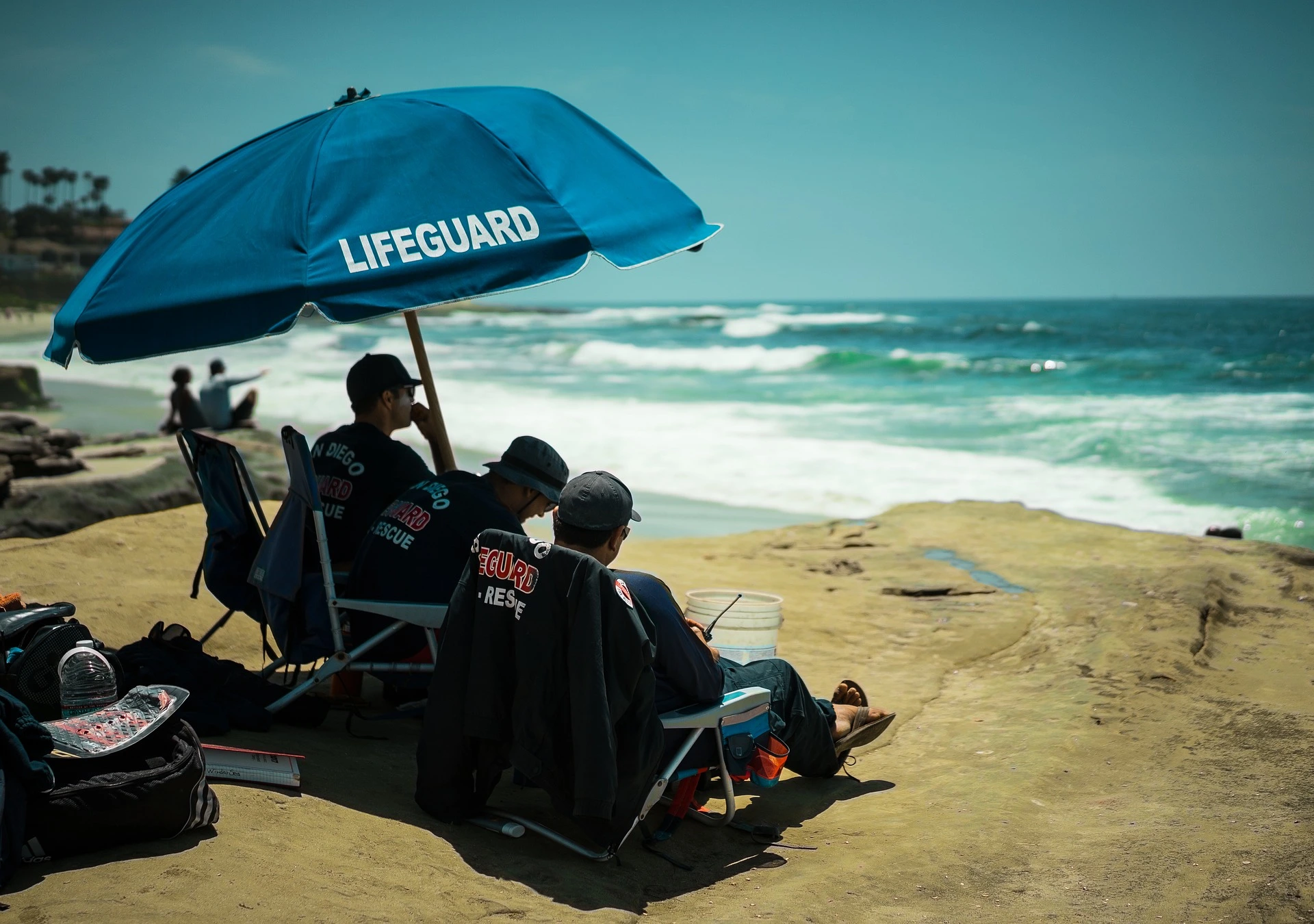
Furthermore, we must address “Supervision Saturation.” In high-density environments like public pools or beaches, the presence of a crowd creates a “Bystander Effect” and a “Diffusion of Responsibility.” Parents assume the lifeguard is watching; the lifeguard assumes the parents are watching. Learning how to manage water safety risks involves breaking this loop through “Active Surveillance Zones” and “Total Accountability” protocols, ensuring that no single person is the sole point of failure in a complex, multi-user environment.
Historical and Systemic Evolution of Aquatic Safety
The formalization of water safety standards followed the industrialization of maritime travel in the 19th century. Early “Life-Saving Stations” were localized, volunteer-driven efforts focused on shipwrecks. It wasn’t until the catastrophic loss of the Titanic in 1912 that the international community recognized the need for “Universal Safety Governance,” leading to the first SOLAS (Safety of Life at Sea) treaty. This marked the shift from “Individual Luck” to “Systemic Redundancy,” mandating that vessels carry life-saving equipment for 100% of their occupants.
In the mid-20th century, the focus expanded to recreational water safety. The rise of the suburbs and the proliferation of residential pools in the 1960s created a new “Risk Vector”: the unattended child. This led to the development of “Layered Protection” legislation, mandating four-sided fencing and self-latching gates. These were not just physical barriers; they were the first legislative acknowledgments that human supervision is a “Fallible Layer.”
Today, in 2026, we are entering the era of “Biometric and AI-Augmented Surveillance.” Computer vision systems can now detect the “Erratic Cadence” of a struggling swimmer in a crowded pool faster than the human eye. However, this systemic evolution brings a new risk: “Automation Bias.” If we rely too heavily on the system, we lose the “Human Intuition” necessary to spot the subtle behavioral cues that precede a submersion. The history of water safety is a constant oscillation between mechanical solutions and human vigilance.
Conceptual Frameworks and Mental Models
Authoritative risk management requires frameworks that allow for rapid assessment under pressure.
1. The “Layers of Protection” Model
Imagine safety as a series of concentric circles around the water.
-
Layer 1: Exclusion (Fences, covers). * Layer 2: Supervision (Active observers). * Layer 3: Competence (Swimming skills, life jackets). * Layer 4: Response (CPR, AEDs). Safety fails only when the “Holes” in all four layers align.
2. The “1-10-1” Rule for Cold Water Immersion
This model dictates the physiological timeline of cold-water shock.
-
1 Minute: Cold shock (Gasping, panic).
-
10 Minutes: Functional disability (Loss of motor skills).
-
1 Hour: Hypothermia (Unconsciousness).
Understanding this timeline prevents “Rescue Panic,” allowing the victim to focus on breath control during the critical first minute.
3. The “Hydraulic Path” Framework
In moving water (rivers/floods), water follows the path of least resistance but creates “Recirculating Currents” at obstructions. This model teaches that the “Downstream” side of an object is not always safe; it can be a “Keeper” that traps debris and humans.
Key Categories of Aquatic Environments and Trade-offs
Each environment presents a unique “Risk Profile” that demands a specific management strategy.
| Environment | Primary Hazard | Tactical Management | Trade-off |
| Controlled (Pools) | Silent Drowning | Fencing & Bio-Surveillance | Safety vs. Privacy/Cost |
| Open Water (Ocean) | Rip Currents/Tides | “Swim Near Lifeguard” | Freedom vs. Exposure |
| Moving Water (Rivers) | Entrapment/Force | PFDs & Route Planning | Adventure vs. Lethality |
| Cold Water (Lakes) | Hypothermia | Thermal Protection (Wetsuits) | Comfort vs. Survival |
| Floods (Urban) | Contamination/Debris | Non-Entry / Vertical Evac | Property vs. Life |
Decision Logic: When selecting a life-saving device, the “Level of Buoyancy” must be weighed against “Wearability.” A Type I PFD (Offshore) provides the most safety but is bulky; a Type III (Flotation Aid) is comfortable but requires the wearer to be conscious to keep their head up. The choice must reflect the “Environmental Distance” to rescue.
Detailed Real-World Scenarios
The “Backyard Pool” Lapse
A family hosts a party with 20 adults and 10 children.
-
The Failure: Everyone assumes “someone” is watching the kids.
-
Failure Mode: “Diffusion of Responsibility.”
-
Resolution: Implementing a “Water Watcher” card—a physical tag that must be worn by one adult who does nothing but watch the water for 15 minutes before passing it to the next.
The “Rip Current” Panic
A strong swimmer is caught in an ocean current pulling them away from shore.
-
The Error: Swimming directly back to shore against the current.
-
The Result: Total exhaustion within 3 minutes, leading to submersion.
-
Resolution: “Energy Conservation”—swimming parallel to the shore until out of the current, or simply floating to wait for rescue.
The “Low-Head Dam” Trap
A kayaker approaches a small, “scenic” drop in a river.
-
The Error: Misjudging the “Boil Line” (the recirculating water).
-
The Outcome: The boat is flipped and held in the hydraulic, preventing the paddler from surfacing.
-
Resolution: Recognition of the “Drowning Machine” architecture and portaging (carrying) around the obstruction.
Planning, Cost, and Resource Dynamics
The “Fiscal Management” of water safety involves a heavy upfront investment to avoid catastrophic “Incident Costs.”
Range-Based Safety Investment (Professional/Facility Level)
| Item | Basic Cost | Strategic/Advanced | Maintenance Cycle |
| Barrier Systems | $2,000 | $15,000 (Alarms/Auto) | Annual Audit |
| PFD Inventory | $500 | $5,000 (SOLAS/Auto) | 5-Year Replacement |
| Bio-Surveillance | N/A | $20,000+ (Computer Vision) | Daily Calibration |
| Training (Staff) | $300/pp | $1,500/pp (Advanced Ops) | Bi-Annual Recert |
Opportunity Cost: Failing to invest in a $5,000 bio-surveillance system may “save” money today, but the “Social and Legal Liability” of a single incident can exceed $5M. In aquatic management, “Compliance” is the floor; “Excellence” is the only sustainable fiscal strategy.
Tools, Strategies, and Support Systems
The “Safety Stack” for 2026 combines physical gear with digital foresight.
-
Self-Inflating PFDs: Utilizing CO2 cartridges to provide buoyancy only when needed, increasing “Wearer Compliance.”
-
PLBs (Personal Locator Beacons): Essential for open water; sends a satellite signal to rescue coordination centers.
-
Throw-Bags: A basic but vital “Non-Entry Rescue” tool for moving water.
-
Water Chemistry Automation: In pools, maintaining pH and chlorine prevents “Turbidity,” ensuring clear sightlines to the bottom.
-
Real-Time Tide/Surf Apps: Monitoring “Coastal Energy” before entering the water.
-
Thermal Protection (Wetsuits/Drysuits): The only way to extend the “1-10-1” timeline in cold environments.
-
AEDs (Automated External Defibrillators): Submersion often leads to cardiac events; immediate electricity is as vital as oxygen.
-
Drain Safety Covers: Preventing “Suction Entrapment” in pools, a mechanical failure that can trap even strong adults.
Risk Landscape: Taxonomy of Compounding Hazards
Water safety is rarely compromised by a single factor. It is the “Compounding” of risks that leads to tragedy.
-
Environmental Compounding: High wind + incoming tide + sunset (low visibility).
-
Physiological Compounding: Alcohol + cold water + exhaustion.
-
Mechanical Compounding: Engine failure + no anchor + drifting toward a lee shore.
-
Psychological Compounding: “Expert Halo” (assuming because you are an expert in one area, you are safe in another).
Governance, Maintenance, and Long-Term Adaptation
Safe water management is a “Maintenance Discipline.” It decays if not actively renewed.
-
The “Daily Site Audit”: Check water clarity, gate latches, and the presence of rescue equipment before anyone enters.
-
The “Skill Decay” Review: Swimming is a perishable skill. In professional settings, staff should undergo “Unannounced Drills” every 30 days.
-
Adjustment Triggers: If water temperature drops below 60°F, mandatory thermal protection or PFDs must be triggered. If pool turbidity exceeds 0.5 NTU, the facility must close.
-
Layered Checklist:
-
Immediate: Is the “Water Watcher” identified?
-
Tactical: Are PFDs sized correctly for the occupants?
-
Strategic: Is there a redundant communication method (VHF/Cell) for rescue?
-
Measurement, Tracking, and Evaluation
How do you measure “Success” in a field where the goal is for nothing to happen?
-
“Near-Miss” Reporting: The most valuable data point. Every time someone slips, gasps, or is “almost” caught in a current, it must be documented to identify “Systemic Weakness.”
-
“Surveillance Compliance” Rates: Tracking how often the “Water Watcher” or lifeguard is actually focused on the water (audited via random video review).
-
“Response Time” Drills: Measuring the time from “Recognition” to “Extraction.” Anything over 90 seconds in a pool is a “System Failure.”
Common Misconceptions and Oversimplifications
-
Myth: “I’ll hear them if they’re in trouble.” Correction: Drowning is silent. The person cannot breathe, let alone scream.
-
Myth: “Water wings/Inflatables keep kids safe.” Correction: These are toys, not safety devices. They can slip off or deflate, creating a “False Security” trap.
-
Myth: “I’m a great swimmer, I don’t need a life jacket.” Correction: A life jacket isn’t for your swimming ability; it’s for when you are unconscious or incapacitated.
-
Myth: “Rip currents pull you under.” Correction: Rip currents pull you out, not under. The drowning happens when the swimmer panics and exhausts themselves.
-
Myth: “Secondary drowning is a common hidden killer.” Correction: While “Delayed Respiratory Distress” exists, it is rare and always follows a “Witnessed Submersion” event involving water inhalation.
-
Myth: “If the water is shallow, it’s safe.” Correction: A person can drown in two inches of water if they are unconscious or trapped.
Conclusion
Managing the risks associated with water is a continuous exercise in “Vigilant Stewardship.”How to manage water safety risks is to accept that the medium is fundamentally hazardous and that human error is inevitable. Success is found in the “Redundant Layers”—the fences that stop the child, the life jacket that floats the unconscious adult, and the trained observer who recognizes the silent struggle. By applying mental models like the “1-10-1 Rule” and maintaining a rigorous governance of the environment, we can enjoy the vast benefits of water while minimizing the potential for loss. Safety is not a destination; it is the constant, quiet work of preventing the holes in the cheese from ever lining up.