How to Avoid Noisy Beach Crowds: The 2026 Authority Audit
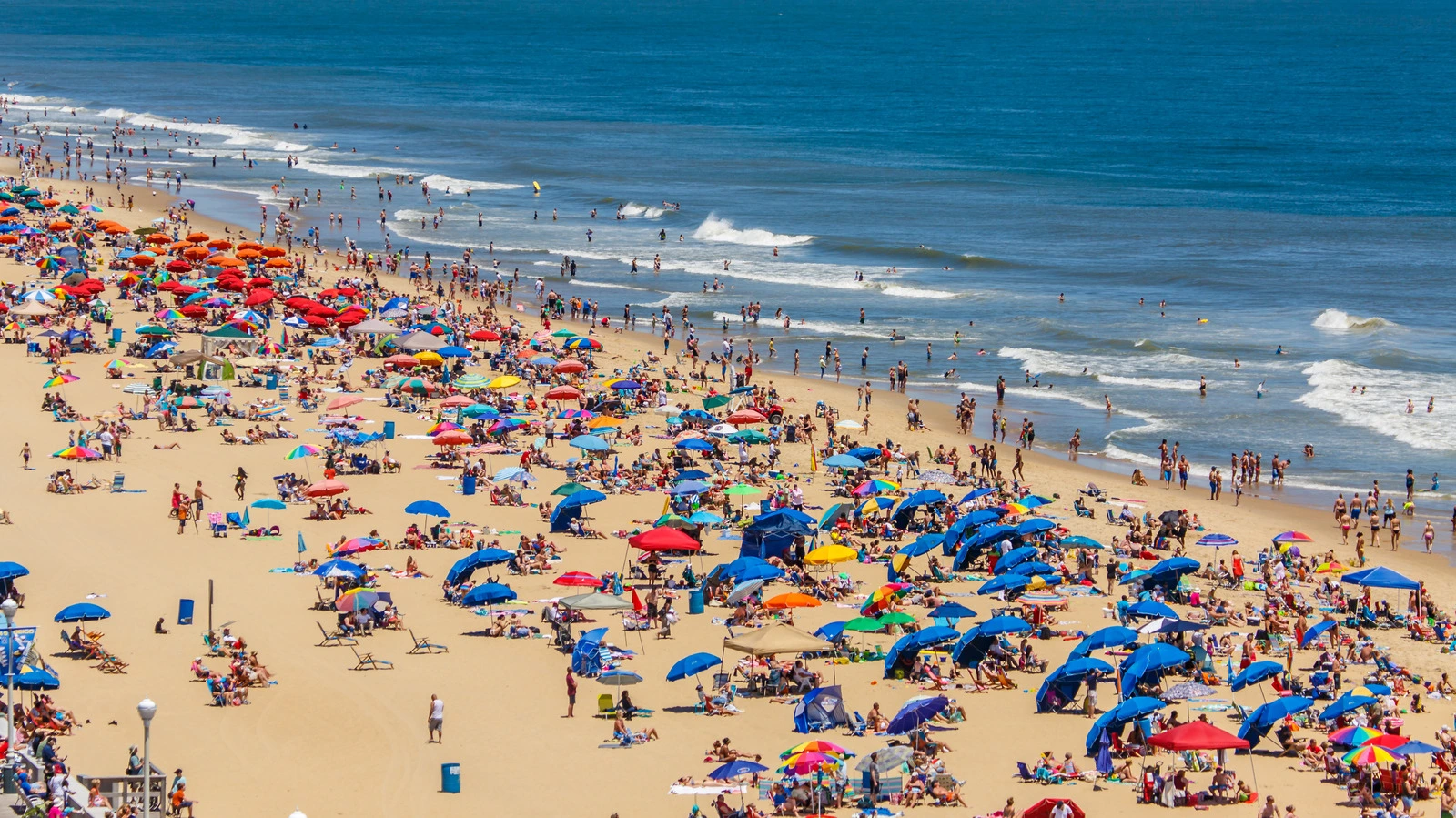
The saturation of premier coastal destinations has reached a tipping point where the “beach experience” is often more characterized by acoustic pollution and physical congestion than by maritime tranquility. In the contemporary travel landscape, the pursuit of a quiet shoreline is no longer a matter of luck; it is a technical challenge requiring a sophisticated understanding of geographic displacement, temporal shifts, and the commercial drivers of mass tourism. As global mobility increases, the “quiet beach” has effectively become a scarce resource, one that must be actively engineered rather than merely found.
The difficulty lies in the fact that digital amplification—social media geotagging and travel-blog listicles—has effectively “solved” for traditional hidden gems, transforming secluded coves into high-traffic zones overnight. To successfully navigate this environment, the authoritative traveler must move beyond the superficial pursuit of “off-the-beaten-path” destinations. Instead, one must analyze the structural limitations of large-scale tourism: parking capacities, proximity to high-density resort hubs, and the “Walkability Threshold” of the average visitor.
This editorial audit serves as a comprehensive framework for reclaiming the acoustic and spatial integrity of the seaside. By deconstructing the systemic patterns of human density—from the “Golden Kilometer” effect to the impact of bathymetric features on sound travel—we can develop a robust methodology for isolation. The objective is to achieve a state of “Coastal Autonomy,” where the traveler is no longer subject to the predictable cycles of the crowd but operates within a personalized logistical model that prioritizes silence and space.
Understanding “how to avoid noisy beach crowds”
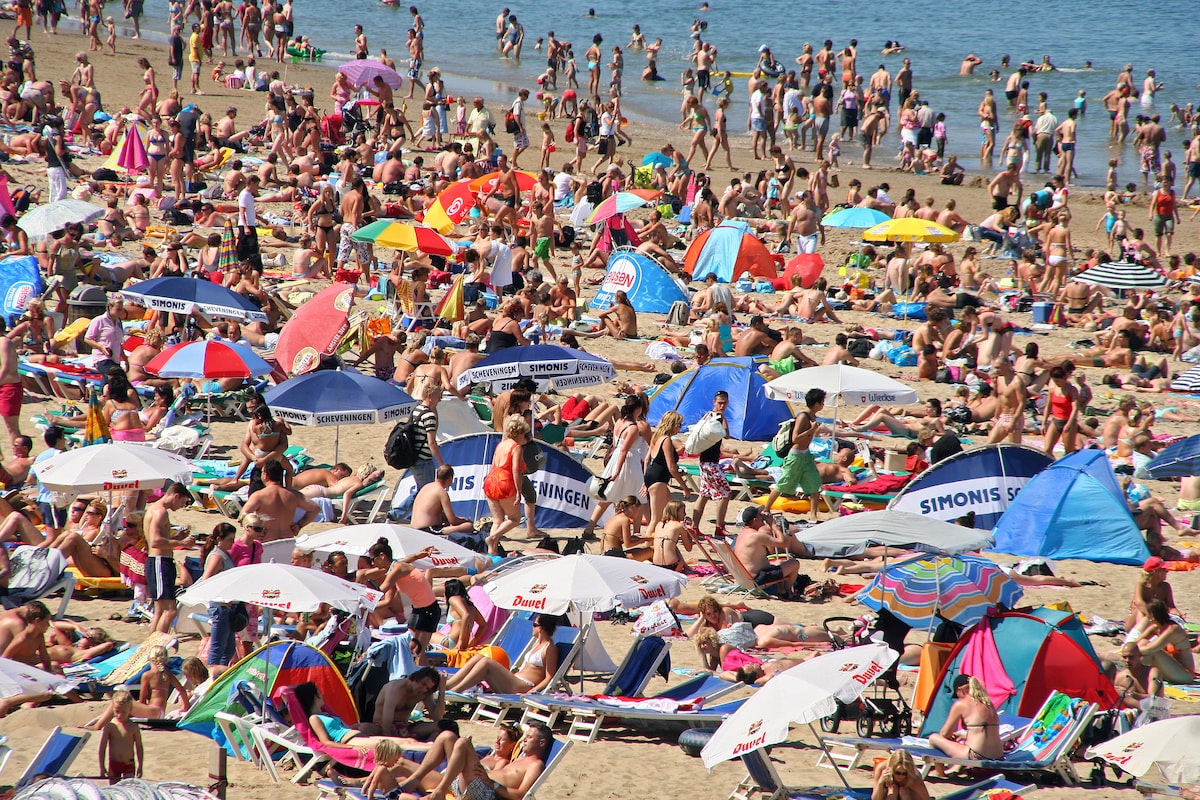
To effectively master how to avoid noisy beach crowds, one must first acknowledge that “crowd” is a relative term governed by the acoustic environment. A beach with fifty people can feel more intrusive than one with five hundred if the spatial arrangement and noise levels are high-decibel. The foundational mistake is equating distance from a city with a lack of noise. In reality, many remote beaches are targeted by tour boats or organized excursions that concentrate noise in a small area. Understanding the “Acoustic Envelope” of a beach—how sound reflects off cliffs or is absorbed by dunes—is as critical as tracking foot traffic.
From a multi-perspective view, the problem of congestion is often a “Logistical Funnel.” Most travelers are bound by the constraints of public transport, established parking lots, and the presence of amenities like restrooms and bars. The oversimplification risk here is assuming that “going early” is a universal solution. While sunrise visits offer a reprieve, they do not account for the “Accumulated Crowd” that arrives mid-morning. A more analytical approach focuses on “Barrier Analysis”—identifying the physical or logistical obstacles that prevent the 90% of travelers from moving beyond the initial entry point of a beach.
Finally, we must account for the “Digital Echo” effect. In 2026, many quiet beaches are discovered through high-engagement digital content. If a location appears on a “Top 10 Secret Beaches” list, it is structurally no longer secret. The authoritative strategy involves “Negative Search”—looking for what is not mentioned, or identifying beaches that lack the specific “Instagrammable” features (like swings or specific rock formations) that drive high-density social media tourism. The goal is to find high-utility, low-aesthetic-commodity coastlines.
The Historical and Systemic Evolution of Coastal Congestion
The transition from the “Grand Tour” coastal exclusivity of the 19th century to the hyper-congested shorelines of today is a narrative of infrastructure and democratized transit. Historically, the “Silent Coast” was protected by the “Friction of Distance.” Reaching a secluded beach required private vessels or significant physical exertion. The mid-20th century introduction of the “Coastal Highway” and the rise of commercial aviation began to erode these barriers, but the real shift occurred with the “App-Driven Economy” of the 2010s.
Ride-sharing apps and localized GPS navigation removed the “Navigation Barrier” that previously kept most tourists on the main boardwalks. Simultaneously, the “Resort-Complex Model” shifted from isolated hotels to interconnected “Tourism Zones.” This systemic change meant that a single resort’s occupancy no longer stayed on-site; instead, it spilled over into every accessible square meter of the surrounding coastline. We have moved from a world of “Secluded Spots” to a world of “Saturated Ecosystems.”
Today, the evolution has reached a point where “Noise” is a commercial product. Beach clubs and “Day Pass” locations utilize high-decibel audio to create a sense of exclusivity and energy. This has created an acoustic “Dead Zone” around major hubs. To find silence in 2026, one must move against the historical trend of convenience, essentially re-introducing the “Friction” that the modern travel industry has worked so hard to eliminate.
Conceptual Frameworks and Mental Models
Navigating the landscape of coastal solitude requires mental models that prioritize “Spatial Intelligence.”
1. The “Golden Kilometer” Rule
This model observes that 95% of beachgoers will not walk more than one kilometer (0.6 miles) from their point of entry (parking lot or bus stop). Therefore, the “Zone of Silence” begins at the 1.1-kilometer mark. If a beach is 3 kilometers long, the central third is almost always a vacuum of solitude, even if the ends are overcrowded.
2. The “Amenity Vacuum” Model
People cluster around resources: water, food, and restrooms. The “Amenity Vacuum” suggests that the noise level of a beach is inversely proportional to its proximity to a toilet or a bar. To find quiet, one must be “Self-Sustaining,” carrying all necessary water and shade to areas where the infrastructure does not exist to support a crowd.
3. The “Bathymetric Sound Shield.”
Sound travels differently depending on the topography. A beach backed by high, concave cliffs will amplify the noise of a few people, making it feel crowded. Conversely, a beach with high, rolling dunes acts as a “Baffle,” absorbing sound. Choosing “Soft Topography” over “Hard Topography” is a key acoustic strategy.
Key Categories of Seclusion and Trade-offs
Seclusion is rarely “free”; it involves a specific trade-off in effort or comfort.
| Category | Typical Barrier | Trade-off | Strategic Correction |
| Hike-In Coves | High physical exertion | Effort vs. Silence | Use a high-fidelity “Roving Pack” for comfort. |
| Tidal Islands | Temporal (Tide) window | Risk of being “cut off.” | Consult tide charts to the minute. |
| Windward Coasts | High wind/rough surf | Noise of nature vs. people | Use the natural “White Noise” to mask crowds. |
| National Seashores | Entry fees/Strict rules | Cost vs. Preservation | Invest in annual passes for “Gatekeeper” access. |
| Industrial Buffers | Aesthetic “Ugliness” | View vs. Privacy | Find “pockets” near ports or non-resort zones. |
Decision Logic: If the goal is absolute silence, a “Hike-In” beach with no road access is the superior choice. If the goal is a balance of comfort and space, the “End-of-the-Road” technique—driving to the absolute terminus of a coastal road—usually yields the best “Distance-to-Density” ratio.
Detailed Real-World Scenarios
The “Promenade” Trap
A traveler visits a famous beach in the Mediterranean with a 2-mile boardwalk.
-
The Failure: They settle near the central stairs because it is “convenient.”
-
The Result: They are surrounded by vendors and music.
-
The Resolution: Walking for 20 minutes past the last concession stand until the boardwalk ends and the terrain becomes “unimproved” sand.
The “Tour Boat” Incursion
A visitor finds a “hidden” cove in Southeast Asia that is inaccessible by land.
-
The Failure: They assume it will be quiet at midday.
-
The Result: At 11:00 AM, five “Long-tail” boats arrive with 40 people for a lunch buffet.
-
The Resolution: Arriving at 7:00 AM and leaving at 10:30 AM, or choosing a cove with “Shallow Reef Access” that prevents boats from docking.
The “Resort Buffer” Logic
A traveler stays in a high-density resort town in the Caribbean.
-
The Strategy: They identify a small patch of sand located between two massive, luxury resorts.
-
The Logic: Because the resorts are “All-Inclusive,” their guests rarely leave the private pool decks. The public sand between them becomes a “No-Man ’s-Land” that is quieter than the “Public” beach in town.
Planning, Cost, and Resource Dynamics
The “Cost of Silence” is often reflected in the gear required to be self-sufficient in non-serviced areas.
Range-Based Operational Logistics
| Resource | Basic Access | High-Utility (Seclusion) | Opportunity Cost |
| Transport | $0 (Walk) | $80 (4×4 Rental/Boat) | High (Transit time) |
| Hydration/Food | $10 (Buy on-site) | $40 (High-capacity cooler) | Low (Self-prepared) |
| Shade | $20 (Rental) | $150 (Portable UV Shelter) | Moderate (Carrying weight) |
| Information | Free (Maps) | $20 (Satellite/Tide apps) | Minimal |
Total Estimated Investment for Autonomy: $200 – $400 in specialized gear.
Variable Factors: The “Noise Floor” of a beach can change within 30 minutes due to the arrival of a single large group. The resource dynamic here is “Adaptability”—having the gear to move quickly if the environment is compromised.
Tools, Strategies, and Support Systems
To maintain a quiet coastal profile, the following “Seclusion Tech Stack” is recommended:
-
Satellite Imagery (Live/Near-Live): Use tools like Google Earth to look for “White Space” between developed areas. Look specifically for “Pedestrian Desire Paths” that lead to the water.
-
Marine Traffic Trackers: Use AIS (Automatic Identification System) apps to see if “Party Boats” or cruise tenders are heading toward your chosen cove.
-
High-Fidelity Tide Apps: Essential for “Tidal Arbitrage”—accessing beaches that are only available (or reachable) at low tide.
-
All-Terrain Beach Wagons: The “Force Multiplier” for the Golden Kilometer rule. If you can wheel 50 lbs of gear comfortably, you can easily out-walk the crowd.
-
Noise-Canceling Wearables: For those times when the wind is low and distant noise carries, high-end “Transparency Mode” headphones can filter out human voices while leaving the sound of the waves.
-
Topographical Maps: To identify steep gradients that act as “Human Filters.” If a path requires a 200-foot descent, 80% of the crowd is eliminated.
-
Local Municipal Zoning Maps: Identifying “Nature Preserves” vs. “Commercial Recreation Zones.”
-
Sun-Path Calculators: To find beaches that go into shadow early; these are often abandoned by the crowd by 3:00 PM, leaving a “Golden Hour” of total silence.
Risk Landscape and Failure Modes
The pursuit of isolation introduces specific risks that are absent on “managed” beaches.
-
The “Isolation Paradox”: If you are alone and injured, there is no lifeguard or bystander to assist. Mitigation: Always use a satellite messenger (like a Garmin inReach) in zero-cell zones.
-
The “Tidal Lock”: Accessing a beach through a cave or around a headland at low tide and being trapped by the rising water. Mitigation: Set “Tide Alarms” for 30 minutes before the turn.
-
The “Private Property” Trap: Attempting to reach a beach through what looks like public land but is actually a private estate. Mitigation: Use “OnX” or similar property-boundary apps.
-
The “Security Vacuum”: Vehicles parked at remote trailheads are frequent targets for theft. Mitigation: Leave nothing in the car; leave the glove box open to show it is empty.
Governance, Maintenance, and Long-Term Adaptation
Coastal solitude requires a “Feedback Loop” of information. A beach that was quiet last year may be the new “Hot Spot” this year.
-
Monitoring Cycles: Perform a “Digital Audit” of your favorite spots every six months. If they are appearing in “Viral” reels, it is time to move them to the “Secondary List.”
-
Adjustment Triggers: If the “Noise Floor” exceeds 60 decibels (roughly the sound of a normal conversation) consistently for 30 minutes, the location is “Compromised,” and the move-order should be triggered.
-
Layered Checklist for Departure:
-
Phase 1: Verify “Low-Density” satellite signals.
-
Phase 2: Cross-reference with “Non-Event” calendars (no local festivals).
-
Phase 3: Check wind-baffle orientation (is the beach protected from land-based noise?).
-
Measurement, Tracking, and Evaluation
How do you quantify a “Successful Seclusion”?
-
The “Horizon Count” (Quantitative): At the peak of the day (1:00 PM), how many other humans are visible in your 180-degree field of vision? A “Tier 1” beach has fewer than five.
-
The “Acoustic Ratio” (Qualitative): Can you hear the sound of the water over the sound of human activity? If the answer is “no,” the mission has failed.
-
The “Social Media Lag”: How long after your visit does the location appear on a public geotag? The longer the lag, the better your “Seclusion Logic” is working.
Common Misconceptions and Oversimplifications
-
Myth: “A rainy day means an empty beach.” Correction: In 2026, many travelers have high-end weather gear. A “Light Rain” day often attracts a specific type of high-density “Active” crowd.
-
Myth: “Private beaches are always quieter.” Correction: Private beaches are often attached to large hotels with high “Guest Density.” A “Remote Public” beach is almost always quieter.
-
Myth: “The further you drive, the quieter it gets.” Correction: People will drive three hours for a “famous” beach, but they won’t walk 15 minutes for an “anonymous” one. Walking is a better filter than driving.
-
Myth: “Weekdays are always quiet.” Correction: With the rise of “Digital Nomadism,” Tuesday is the new Saturday in many coastal regions.
-
Myth: “Winter is the best time for quiet.” Correction: While the crowd is smaller, the “Acoustic Floor” is higher due to stronger winds and storm surges, which can make the beach feel “noisy” in a different way.
Ethical and Practical Considerations
There is a “Seclusion Paradox” in coastal travel: the more we seek silence, the more we pressure the few remaining pristine environments. An authoritative approach to isolation includes a strict “Leave No Trace” protocol. Moving beyond the “Golden Kilometer” puts a traveler in areas with no trash collection and fragile ecosystems. Practically, this means packing out not just your own waste, but any “Crowd Drift” (trash that has washed up) to maintain the integrity of the space. There is also the “Local Respect” factor; avoiding noisy crowds shouldn’t mean intruding on the privacy of local fishing communities who use these quiet spots for their livelihoods.
Conclusion
Reclaiming the silence of the sea is an act of “Strategic Displacement.” How to avoid noisy beach crowds is to understand the behavioral economics of the average tourist and then systematically choose the path they are unwilling to take. Whether it is the physical “Friction” of a hike-in cove, the “Acoustic Baffle” of a high-dune environment, or the “Temporal Arbitrage” of a tidal island, silence is available to those who view the coast through an analytical lens. The beach remains a site of profound restoration, provided one has the logistical discipline to look past the boardwalk and move into the quiet “White Space” of the map.