
Common Beachfront Resort Booking Mistakes: The 2026 Authority Audit
The hospitality sector operates on a sophisticated architecture of yield management and visual persuasion, where the beachfront resort represents the pinnacle of high-margin inventory. For the institutional traveler or the meticulous vacationer, securing a maritime asset is not merely a transaction but a complex negotiation with geography, seasonality, and digital marketing algorithms. The allure of the shoreline often bypasses the analytical centers of the brain, leading to systemic errors in judgment that manifest as inflated costs, logistical friction, and a fundamental misalignment between expectations and physical reality.
Navigating the booking process requires a deconstruction of the “Coastal Premium.” This premium is not a flat fee but a variable influenced by tidal patterns, local labor laws, and the metabolic rate of saltwater corrosion on property amenities. When a traveler enters the booking funnel, they are essentially entering a simulation designed to emphasize aesthetic beauty while obscuring the operational limitations of the site. A failure to recognize this dynamic is the primary driver of dissatisfaction in high-end coastal travel.
In an era of hyper-curated digital footprints and dynamic pricing, the margin for error has narrowed significantly. A single oversight regarding “resort fees” or a misunderstanding of “partial ocean views” can result in a 30% increase in total expenditure without a corresponding increase in utility. This editorial analysis serves as a definitive audit of the booking lifecycle, identifying the structural pitfalls that compromise value and providing a rigorous framework for securing high-fidelity coastal experiences.
Understanding “common beachfront resort booking mistakes”
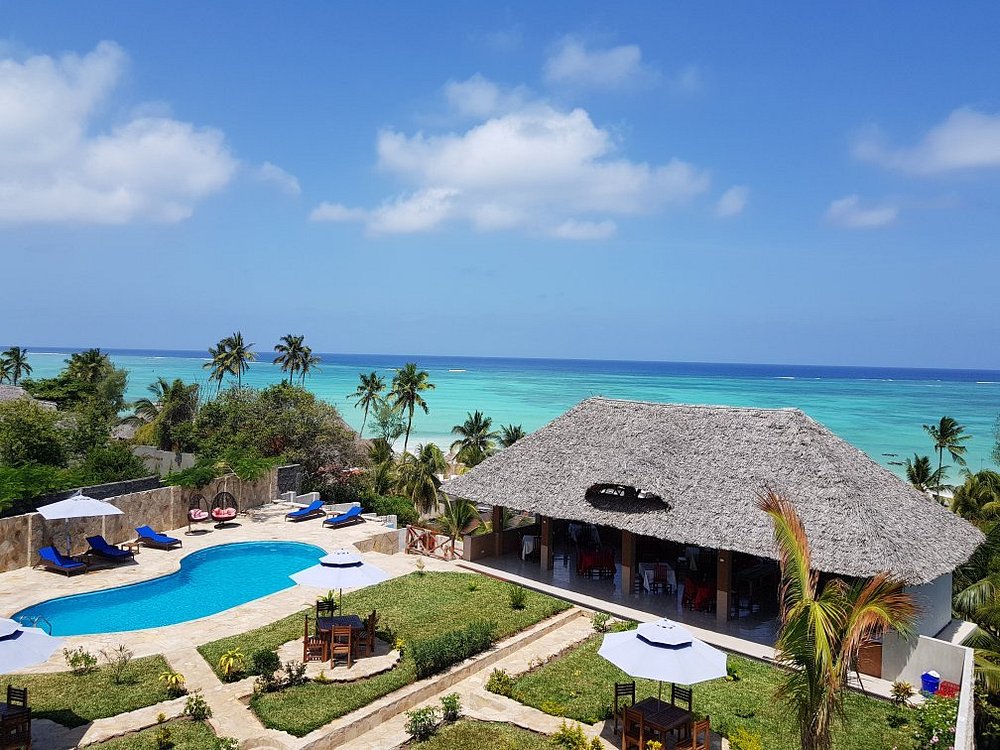
To effectively address common beachfront resort booking mistakes, one must first acknowledge that the booking environment is an asymmetrical marketplace. The resort possesses perfect information regarding its beach quality, construction noise, and “true” view corridors, while the consumer relies on wide-angle photography and aggregated reviews. A foundational error is the “Aesthetic Bias”—the tendency to prioritize the visual appeal of a property over its logistical viability. For instance, a resort may feature a pristine white-sand beach in its marketing, but a failure to check local seaweed migration patterns (such as Sargassum blooms) can render that beach unusable during the actual stay.
Another perspective involves the “Semantic Trap.” The hospitality industry utilizes specific nomenclature to justify price tiers. Terms like “Ocean Front,” “Ocean View,” and “Partial Ocean View” are not standardized across the industry. A common mistake is assuming that “Ocean View” guarantees a sightline of the horizon from the bed; in many urban coastal environments, this might simply mean one can see a sliver of water between two adjacent high-rises if standing on the far corner of the balcony. Understanding the precise architectural definition used by a specific property is the only way to avoid paying for a premium that does not exist.
Furthermore, we must account for the “Dynamic Pricing Reflex.” Many travelers attempt to time the market based on outdated advice, such as “booking on a Tuesday.” In 2026, pricing is managed by high-frequency algorithms that respond to browser cookies, regional demand, and even the user’s device hardware. A critical mistake here is the failure to utilize “Clean State” browsing or VPNs to bypass localized price hikes. Systemic complexity often turns a ‘good deal’ into a mirage. Real value hides in the contract’s fine print—specifically within cancellation flexibility and inclusive amenities—rather than the deceptive headline rate.
Historical and Systemic Evolution of Maritime Hospitality
The development of the beachfront resort has transitioned from the “Grand Hotel” era of the late 19th century to the “Mega-Resort” model of the late 20th century, and finally to the “Boutique-Experiential” era of 2026. In the early days, proximity to the water was a health-driven pursuit, where the “sea air” was the primary product. Mistakes were rare because the supply was limited and the pricing was transparent. However, the post-war boom in commercial aviation led to the commodification of the coastline, necessitating more aggressive marketing tactics to differentiate properties in crowded markets like the Caribbean or the Mediterranean.
The 1990s introduced the “All-Inclusive” revolution, which sought to simplify the booking process by bundling costs. While this reduced the risk of “bill shock,” it introduced a new category of mistakes: the “Quality-Quantity Paradox.” Travelers began booking based on the number of restaurants or bars rather than the quality of the beach or the service. This led to a systemic decline in maintenance standards at many high-volume properties, where the “beachfront” designation was used to mask aging infrastructure and mediocre culinary offerings.
Today, we see the rise of “Digital Opaque Booking.” Major platforms now use dark patterns to create artificial urgency (“Only 1 room left!”). This environment punishes the impulsive booker. Historical evolution has shifted the industry from a relationship-based booking model to an algorithmic one. This transition creates a new class of mistakes rooted in low digital literacy and a dangerous over-reliance on third-party aggregators that lack real-time property data.
Conceptual Frameworks and Mental Models
Navigating the high-stakes world of coastal hospitality requires specific mental models to filter out marketing noise.
1. The “Total Cost of Presence” (TCP)
This model dictates that the headline room rate is only 60% of the actual cost of occupying a beachfront space. The TCP includes resort fees, mandatory valet parking, beach umbrella rentals, and the “captive audience” premium on food and beverage. Successful booking involves calculating the TCP before confirming the reservation.
2. The “View-to-Value” Ratio
This framework requires the booker to quantify how much time will actually be spent utilizing the view. If the traveler intends to be off-site for excursions 80% of the time, paying a 40% premium for an “Ocean Front” room is a fiscal failure. The mental model here is “Utility over Status.”
3. The “Coastal Entropy” Model
In a maritime environment, buildings degrade at an accelerated rate. This model suggests that a resort that has not undergone a renovation in the last three years—regardless of its five-star status—is likely experiencing “hidden decay.” Checking the “last renovation date” is a critical step in the audit process.
Key Categories of Booking Errors and Trade-offs
The maritime booking landscape is rife with trade-offs. To avoid common beachfront resort booking mistakes, one must choose which “friction points” are acceptable.
| Category | Typical Error | Trade-off | Strategic Correction |
| Geography | Ignoring “Leeward vs. Windward” | The windward side is cooler but has rougher water and more debris. | Match the side of the island to the desired activity (surfing vs. swimming). |
| Infrastructure | Booking during “Renovation Season” | Lower price vs. construction noise and closed pools. | Cross-reference property notices with third-party traveler photos. |
| Logistics | Assuming “Private Beach” means “Exclusive.” | In many jurisdictions, the sand is public; only the chairs are private. | Research local coastal access laws to avoid overcrowding surprises. |
| Financial | Non-refundable “Pre-pay” rates | Savings vs. zero flexibility in a climate-volatile region. | Always choose a “Flexible” rate during hurricane or monsoon seasons. |
| Environmental | Ignoring “Tidal Range” | A beautiful beach at high tide may be a mudflat at low tide. | Consult local tide charts for the specific travel dates. |
Decision Logic: When faced with a choice between a 4-star “New” resort and a 5-star “Legacy” resort, the “New” resort usually offers higher structural reliability and modern HVAC systems, which are essential in high-humidity coastal zones.
Detailed Real-World Scenarios
The “Stock Photo” Disappointment
A traveler books a “Beachfront Villa” based on photos of a wide, sandy expanse. Upon arrival, they find the beach has been eroded by a recent storm, leaving a steep drop-off and rocky terrain.
-
The Flaw: Relying on the resort’s official gallery, which may be five years old.
-
The Resolution: Check the “Location Tag” on social media platforms to see “raw” photos posted by guests in the last 48 hours.
The “Captive Audience” Food Tax
A couple finds a “Budget” beachfront resort in a remote area.
-
The Flaw: They failed to realize there are no local restaurants within 10 miles.
-
The Outcome: They spent $200 per day on mediocre on-site dining, negating the $100/night savings on the room.
-
The Resolution: Use satellite maps to verify the “Walkability Score” to local amenities.
The “Resort Fee” Escalation
A business traveler books a room at $300/night.
-
The Flaw: They did not read the “Taxes and Fees” dropdown.
-
The Outcome: A $50 “Resort Fee,” $40 “Valet Fee,” and $20 “Beach Access Fee” brought the daily total to $410.
-
The Resolution: Prioritize properties with “Transparent Pricing” or “All-In” luxury designations.
Planning, Cost, and Resource Dynamics
The “Cost of Coastal Permanence” is the primary driver of resort pricing. The closer a structure is to the water, the more it costs to maintain, and those costs are passed directly to the guest.
Annualized Price Volatility (Range-Based)
| Seasonality | Price Multiplier | Risk Level | Primary Driver |
| Peak (Holiday) | 2.5x – 4.0x | Low (Weather) | Social demand; school breaks |
| Shoulder | 1.0x (Baseline) | Moderate | Optimal balance of cost and climate |
| Off-Peak (Storm) | 0.4x – 0.7x | High | Hurricane/Monsoon risk; humidity |
Opportunity Cost: Booking a “Suite” in a mediocre location versus a “Standard” room in a prime, high-demand location often results in a lower net enjoyment. In beachfront travel, the “Location within the Location” is the most valuable resource.
Tools, Strategies, and Support Systems
To mitigate the risk of common beachfront resort booking mistakes, a traveler must employ a “Professional Grade” toolset:
-
Bathymetric Maps: Used to understand the depth and slope of the ocean floor in front of the resort. Shallow slopes lead to calmer water; steep slopes lead to dangerous shore-breaks.
-
Sargassum Trackers: Essential for Caribbean and Atlantic bookings to ensure the beach isn’t buried in decaying seaweed.
-
Historical Weather Archeology: Looking at 10-year weather patterns rather than 7-day forecasts.
-
Satellite “Night Mode”: Using satellite imagery to see if the resort is surrounded by industrial lighting or noise-generating highways.
-
Direct-to-Front-Desk Verification: Bypassing the central reservation line to ask a local employee about the current state of the beach.
-
Credit Card “Travel Protection” Audits: Ensuring the card used for booking covers “Weather-Related Cancellations,” specifically for tropical storms.
-
VPN Currency Arbitrage: Checking the resort price from a server located in the resort’s home country to find “Resident” rates.
-
Construction Permit Searches: Checking local municipal websites to see if a massive skyscraper is planned for the lot next door.
Risk Landscape and Failure Modes
The “Failure Modes” of a coastal vacation are often systemic. A single error in the booking phase can cascade through the entire trip.
-
The “Micro-Climate” Failure: A resort located on the “Rainy Side” of a mountain-shadowed island.
-
The “Social Misalignment”: Booking a “Family Friendly” resort for a honeymoon, leading to high noise levels and crowded pools.
-
The “Infrastructure Collapse”: Choosing a remote resort that relies on a single generator or water desalination plant. If the system fails, the vacation ends.
-
The “Algae Bloom” Contingency: If the beach becomes unusable, does the resort have a “Pool-to-Guest” ratio that can handle the diverted traffic?
Governance, Maintenance, and Long-Term Adaptation
For the frequent traveler, booking is a “Feedback Loop.” One must govern one’s own travel data to improve future outcomes.
-
Review Cycles: Conduct a “Post-Stay Audit” to see which marketing claims were true and which were exaggerations.
-
Adjustment Triggers: If a specific brand fails to meet its “View” promise twice, it should be permanently blacklisted from the traveler’s portfolio.
-
Layered Checklist:
-
Phase 1: Verify “True” beachfront (no road between hotel and sand).
-
Phase 2: Confirm all-in TCP (Total Cost of Presence).
-
Phase 3: Check “Freshness Date” of room renovations.
-
Phase 4: Validate “Seasonal Hazards” (Jellyfish, seaweed, storms).
-
Measurement, Tracking, and Evaluation
How do we quantify a “Successful Booking”?
-
Leading Indicator: The “Price per Linear Foot of Beach Access.” This measures the density of the resort. High-density resorts have higher stress levels.
-
Lagging Indicator: The “Friction-to-Fun Ratio”—the amount of time spent resolving booking issues versus enjoying the water.
-
Documentation Examples:
-
Comparison spreadsheet of “Net Room Rate” vs “Gross Folio Total.”
-
Screenshots of specific “Ocean View” promises at the time of booking.
-
Record of correspondence with the concierge regarding specific amenities.
-
Common Misconceptions and Oversimplifications
-
Myth: “All beaches are public.” Correction: While the water may be public, the access points and the “Dry Sand” are often legally privatized or restricted by the resort’s footprint.
-
Myth: “Booking through a big site is safer.” Correction: Third-party sites often have the most restrictive cancellation policies and the least accurate room descriptions.
-
Myth: “Photos don’t lie.” Correction: Tilt-shift lenses and high-saturation filters can make a rocky pond look like a turquoise lagoon.
-
Myth: “A higher price means a better beach.” Correction: Price is often a reflection of real estate taxes and branding, not ecological quality.
-
Myth: “Five stars means everything is included.” Correction: In many regions, five stars only refers to the presence of specific physical amenities (like a hair salon), not the quality of the service or the inclusiveness of the price.
Ethical and Practical Considerations
In 2026, the “Ethical Booking” movement emphasizes the environmental impact of beachfront structures. Resorts that utilize “Hard Armor” (seawalls) often destroy the beach for their neighbors. A practical and ethical booking strategy involves choosing resorts that utilize “Soft Engineering” (dune restoration) and have a transparent policy on local water usage. Avoiding properties that displace local communities or restrict traditional fishing access is a key component of being an “Authoritative Traveler.”
Conclusion
Securing a high-value coastal experience is an exercise in “Strategic Pessimism”—expecting marketing hyperbole and verifying every claim through independent data. The common beachfront resort booking mistakes detailed here are not merely inconveniences; they are structural failures in the travel planning process. By adopting a “Total Cost of Presence” mindset and utilizing modern diagnostic tools like sargassum trackers and satellite audits, the sophisticated traveler can bypass the algorithmic traps set by the hospitality industry. Ultimately, the quality of a beach vacation is determined 90 days before the first step is taken on the sand.