Best Beachfront Resorts for Families: The 2026 Definitive Reference Guide
The architecture of contemporary family travel has undergone a profound structural shift, moving away from the simplistic “kids’ club” amenities of the late 20th century toward a more integrated, high-fidelity hospitality model. The modern beachfront resort is no longer merely a stationary vessel for seaside recreation; it is a complex, multi-modal ecosystem that must negotiate the conflicting requirements of multi-generational demographics, ecological fragility, and rigorous logistical demands. This evolution is driven by a sophisticated consumer class that views leisure not as an absence of activity, but as a curation of specific, high-value experiences that occur at the intersection of land and sea.
Evaluating the caliber of a coastal property requires an analytical lens that pierces through the superficial gloss of marketing photography. A truly authoritative resort plan must account for the “metabolic” needs of a family unit—the invisible flow of privacy, the mechanical reliability of on-site utilities, and the psychological transition between shared public spaces and secluded private quarters. In a beachfront context, these needs are exacerbated by the relentless entropy of the marine environment, where salt, wind, and tide act as constant stressors on both the physical infrastructure and the operational fluidity of the resort.
As we move through 2026, the industry is witnessing a transition toward “Dynamic Permanence,” where resort designs are increasingly judged by their ability to adapt to shifting coastal geomorphology while maintaining a consistent standard of luxury. For families, this means the difference between a resort that merely occupies a beach and one that masterfully interprets the shoreline to provide safety, educational engagement, and environmental stewardship. This pillar article provides a definitive deconstruction of the systemic logic required to identify, evaluate, and inhabit the world’s most sophisticated coastal assets.
Understanding “best beachfront resorts for families”
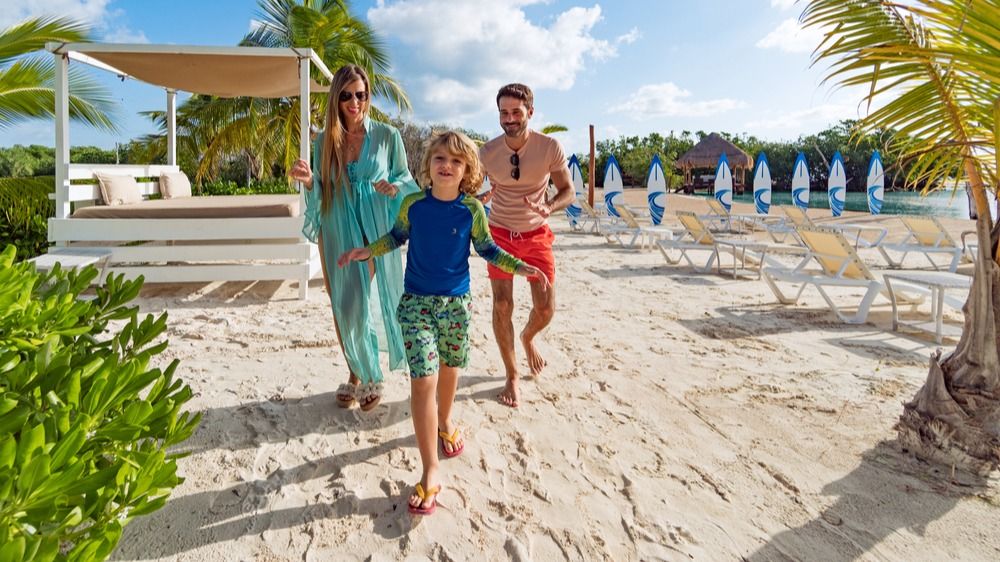
To accurately identify the best beachfront resorts for families, one must first dismantle the reductive notion that “family-friendly” is a synonym for “child-centric.” In a professional editorial context, the highest tier of family resorts is those that achieve “Intergenerational Equilibrium.” This is a state where the design and service protocols provide equal utility to a toddler, a teenager, and a grandparent simultaneously, without one demographic’s needs compromising the experience of another. A common misunderstanding in the industry is that adding a water slide or a themed nursery satisfies the criteria; in reality, true quality is found in the “Acoustic and Spatial Buffering” that allows for vibrant activity and profound silence to exist within the same square footage.
A second perspective involves “Hydrodynamic Safety and Literacy.” The premier beachfront options are characterized by how they negotiate the interface between the resort and the water. This involves more than just a lifeguard stand; it encompasses the physical grading of the beach, the presence of natural or engineered breakwaters to manage rip currents, and the pedagogical depth of their maritime programs. The “best” resorts treat the ocean as an active participant in the guest experience, providing the tools and expertise for families to engage with marine biology and navigation safely and intelligently.
Furthermore, we must account for “Logistical Sovereignty.” For a family, the greatest luxury is the elimination of friction. Developers attain operational harmony through ‘Micro-Proximity’—the strategic placement of dining, hygiene, and recreation facilities. This layout eliminates logistical ‘failure points,’ ensuring that a forgotten diaper or a needed nap never triggers a 20-minute trek across a sprawling campus. When evaluating these properties, the ‘Metabolic Efficiency’ of the design—the amount of physical and emotional energy the architecture conserves—serves as a primary metric of success.
Deep Contextual Background: The Evolution of Coastal Hospitality
The historical trajectory of family-oriented beachfront travel began with the “Grand Hotels” of the 19th century, which were essentially terrestrial fortresses built to overlook the sea. These properties viewed the beach as a visual backdrop rather than a participatory space. Throughout the mid-20th century, the rise of the “All-Inclusive” model in the Caribbean and Mexico democratized beach access, but often at the cost of architectural nuance and environmental integration. These were “Closed Systems” designed to keep guests within a curated bubble.
By the early 2000s, the “Boutique” movement began to influence family travel, introducing the concept of “Sense of Place.” The focus shifted toward integrating the resort into the local culture and ecology. However, many of these properties lacked the mechanical and operational robustness required to handle the high-volume needs of families. They were aesthetically pleasing but logistically fragile.
In 2026, we have entered the era of the “Resilient Adaptive Resort.” Modern top-tier properties are built using modular construction and bio-integrative engineering. They utilize “Sacrificial Landscapes”—dune systems that can be destroyed by a storm surge to protect the core structures and regrow naturally. The contemporary standard for the best beachfront resorts for families is a property that functions as a high-tech life-support system wrapped in a low-impact, organic aesthetic.
Conceptual Frameworks and Mental Models
Navigating the complexities of high-end family travel requires a shift in analytical orientation.
1. The “Radius of Independence” Model
This framework measures how far a child or teenager can safely move away from their parents within the resort ecosystem. The highest-rated resorts maximize this radius through “Passive Surveillance”—designing sightlines and security perimeters that are invisible to the guest but provide a total safety net. This allows children to experience autonomy while parents experience true relaxation.
2. The “Atmospheric Zonation” Framework
This model dictates that a resort must have at least three distinct “Acoustic Zones”:
-
The High-Energy Hub: Centralized pools and recreation.
-
The Transitional Buffer: Dining and social spaces with moderate sound damping.
-
The Sanctuary Zone: Sleeping quarters and wellness areas where decibel levels are strictly governed.
Failure to maintain these zones results in “Sensory Overload,” a leading cause of family vacation dissatisfaction.
3. The “Coastal Metabolic” Framework
This views the resort as an organism. Input (energy, food, water) and Output (waste, carbon) must be managed with “Zero-Trace” aspirations. For families, this is increasingly a matter of ethical alignment. A resort that utilizes decentralized desalination and solar-hydrogen microgrids provides a “Pedagogical Backdrop,” teaching children about sustainability through the very infrastructure of their vacation.
Key Categories and Variations of Beachfront Assets
The global geography of coastal travel necessitates diverse structural solutions for family habitation.
| Category | Primary Environment | Core Advantage | Operational Trade-off |
| Monolithic Atoll Resorts | Maldives / South Pacific | Total privacy; overwater safety | High logistics tax (seaplane access) |
| Dune-Integrated Campuses | US East Coast / Mexico | Storm resilience; natural play | Massive salt-mist maintenance tax |
| Cliff-Hanging Estates | Mediterranean / California | Superior views; thermal cooling | Difficult “Stroller Logistics” |
| Mangrove-Buffered Hubs | SE Asia / Florida Keys | Ecological immersion; calm water | Potential for high insect activity |
| Urban Beachfront Towers | Hawaii / Miami | Proximity to city infrastructure | High “Acoustic Pollution” risk |
Decision Logic: For a family with infants, a “Mangrove-Buffered Hub” is often superior due to the lack of wave energy and shallow entries. Conversely, families with teenagers generally find “Urban Beachfront Towers” more effective due to the “Radius of Independence” extending into the local city culture.
Detailed Real-World Scenarios
The “King Tide” Operational Pivot
A top-tier resort in the Bahamas faced an unexpected storm surge during a peak family holiday week.
-
Storm surge inundated the primary beach club, threatening to cancel all outdoor activities for 200 families. This breach compromised the resort’s core value proposition and stalled the guest’s metabolic cycle. To secure the stay, the engineering team deployed rapid-extraction pumps and fortified the perimeter, reclaiming the recreational space and preventing a total loss of guest trust.
-
Strategic planners engineered ‘Redundant Recreation Zones’ on higher ground, allowing the staff to pivot to an inland ‘Adventure Grove’ within two hours. This foresight neutralizes the impact of coastal flooding and secures the guest experience against environmental disruption. By deploying secondary amenities, the resort maintains its service-level sovereignty while the primary beach club recovers.
-
Outcome: Guest satisfaction remained high because the resort’s “Hydraulic Buffer” allowed the core hospitality functions to remain dry and operational.
The “Acoustic Leak” Failure
A high-luxury resort in Mexico received poor reviews despite having world-class amenities.
-
The Failure: The “Sanctuary Zone” was placed too close to the “High-Energy Hub” exhaust fans and the evening entertainment stage.
-
The Second-Order Effect: Toddlers couldn’t nap during the day, leading to evening “Meltdowns” in the fine-dining areas, which then ruined the experience for adult-only travelers.
-
Lesson: Physical distance is the only reliable “Acoustic Shield” in beachfront planning.
Planning, Cost, and Resource Dynamics
The “Maintenance Tax” on coastal property is a significant driver of guest pricing. Salt air is an unrelenting corrosive agent that requires constant, labor-intensive intervention.
Annual Resource Estimation (Per Guest Unit)
| Resource | Low-Impact (Inland) | Beachfront High-Fidelity | Frequency |
| Exterior Finishing | $1,200 | $5,500 | Quarterly Salt-Wash |
| HVAC Filtration | $400 | $1,800 | Monthly Desalinization |
| Landscape Grooming | $800 | $3,500 | Weekly Sand Management |
| Security/Surveillance | $1,500 | $4,000 | 24/7 Active/Passive |
Opportunity Cost: The primary “Hidden Cost” for families is the “Transfer Friction.” A resort that is $200 cheaper per night but requires a 3-hour shuttle ride from the airport loses 6 hours of high-value beach time. The best beachfront resorts for families are those that optimize the “Door-to-Sand” temporal ratio.
Tools, Strategies, and Support Systems
-
Passive Acoustic Barriers: Utilizing “Soft Landscaping” (dense succulents and palm thickets) rather than concrete walls to dampen sound.
-
Vacuum-Flush Sewage: Critical for coastal resorts to prevent environmental leaching and handle the high-volume surge of family units.
-
Smart-Wearable Ecology: RFID bands for children that act as room keys, meal passes, and “Geofencing” safety tags.
-
Bifacial Solar Glass: Utilizing the “Albedo Effect” (reflection off white sand) to generate 20% more power for the resort’s desalination plants.
-
Marine-Grade 316 Stainless Steel: The absolute minimum standard for all balcony hardware and pool fittings to prevent “Rusty Drip” staining.
-
Desalination RO Micro-Grids: Allowing the resort to operate independently of fragile local water tables.
-
Bio-Fence Enclosures: Using natural topography and water features to define “Kids-Only” zones without the use of unsightly fencing.
-
Real-Time Hydrographic Telemetry: Dashboards in the lobby showing current rip-tide risks, UV indices, and jellyfish migration patterns.
Risk Landscape and Failure Modes
-
The “Sand-Siltation” Trap: Over-development can change current patterns, causing the beach to disappear (erosion) or become a stagnant mud-flat (siltation) within five years.
-
Galvanic Corrosion: When different metals touch in salt air, they create a battery that dissolves the structure. This is a common cause of “Invisible Structural Failure” in older beachfront resorts.
-
The “Micro-Plastic” Paradox: Resorts that promote “Eco-Tourism” but use plastic water bottles create a compounding risk to their own primary asset: the beach.
-
Pathogen Amplification: High-density children’s pools without “Ultraviolet-C” (UVC) secondary filtration can become “Bio-Hotspots” for rapid virus transmission.
Governance, Maintenance, and Long-Term Adaptation
A beachfront asset requires “Naval Discipline.” A coastal asset never reaches a state of ‘completion’; it exists in a cycle of perpetual restoration. This ongoing metabolic commitment combats the corrosive force of the marine environment and secures the property’s long-term sovereignty. By institutionalizing constant renewal, the operator prevents the sea from claiming the architecture and ensures the luxury experience remains at its peak.
-
Daily Protocol: High-pressure fresh-water rinse of all exterior mechanical units.
-
Quarterly Audit: “Structural Integrity Scans” of all boardwalks and pile-driven foundations to check for marine borer damage.
-
Adjustment Triggers: If the “Mean High Water Mark” encroaches within 10 meters of a structure, a “Managed Retreat” or “Dune Nourishment” protocol is triggered.
-
Governance Layers:
-
Tier 1: Safety and Life Support (Pumps, Power, Medical).
-
Tier 2: Enclosure Integrity (Roofs, Glass, Seals).
-
Tier 3: Aesthetic Fidelity (Paint, Fabric, Sand Quality).
-
Measurement, Tracking, and Evaluation
How do we quantify the “Best” in this sector?
-
Leading Indicator: “The Friction Coefficient.” The number of times a family must ask for assistance with a basic logistical need (towels, water, directions). Low numbers indicate superior design.
-
Lagging Indicator: “Re-Entry Velocity.” The percentage of guests who re-book for the following year within 30 days of departure.
-
Qualitative Signal: “The Nap-Time Audit.” The ability for a guest to find 90 minutes of total silence in a “Sanctuary Zone” during peak pool hours.
Common Misconceptions and Oversimplifications
-
Myth: “The whitest sand defines the best beach.” Correction: Extremely white sand often consists of crushed coral, which lacerates delicate skin and reflects 90% of UV rays. This high albedo accelerates sunburns, particularly for children, turning a visual asset into a medical liability. By selecting softer, silica-based or oolitic sands, the developer secures the guest’s physical sovereignty and extends the duration of safe outdoor recreation.
“Golden” quartz sand is often more durable and comfortable.
-
Myth: “Kids’ clubs are for parents to get rid of kids.” Correction: High-end clubs are “Immersive Educational Labs” where children learn navigation, local linguistics, and marine conservation.
-
Myth: “Direct beach access is always better.” Correction: Direct access without a “De-Sanding Station” (showers/brushes) leads to sand in the bed linens, which causes skin irritation and mechanical wear on laundry systems.
-
Myth: “All-inclusive means higher value.” Correction: In the luxury tier, “All-Inclusive” often leads to “Menu Fatigue” and lower-quality ingredients. The best beachfront resorts for families often use “A La Carte Excellence” with flexible credit systems.
Ethical, Practical, and Contextual Considerations
The expansion of coastal hospitality must negotiate the “Sovereignty of the Local.” When a resort occupies a beach, it often disrupts traditional fishing or public access. The most authoritative resorts in 2026 are those that incorporate “Permeable Boundaries,” allowing local culture to interact with the resort without compromising guest safety. Furthermore, the use of “Artificial Reefs” as breakwaters provides a dual benefit: protecting the resort’s sand while creating a nursery for local fish populations. This “Bio-Resilience” is the hallmark of a property that understands its place in the long-term coastal hierarchy.
Conclusion
The architecture of the coast is a discipline of humility. The best beachfront resorts for families are those that recognize the ocean as the senior partner in the relationship. By employing “Fluid Resilience” and “Atmospheric Zonation,” these properties create a space where the chaos of family life can harmonize with the rhythm of the tide. In this field, the depth of ‘Acoustic Silence’ and the reliability of ‘Blue Infrastructure’ define success, eclipsing the mere height of a water slide. High-fidelity engineering prioritizes decibel-suppression and hydraulic stability to ensure a frictionless guest environment. This structural discipline secures the property’s premium positioning by eliminating the mechanical intrusion of the sea. A great resort is not a building on the sand; it is a sustained performance of engineering, empathy, and environmental stewardship that allows families to reconnect with each other and the natural world in its most potent form.