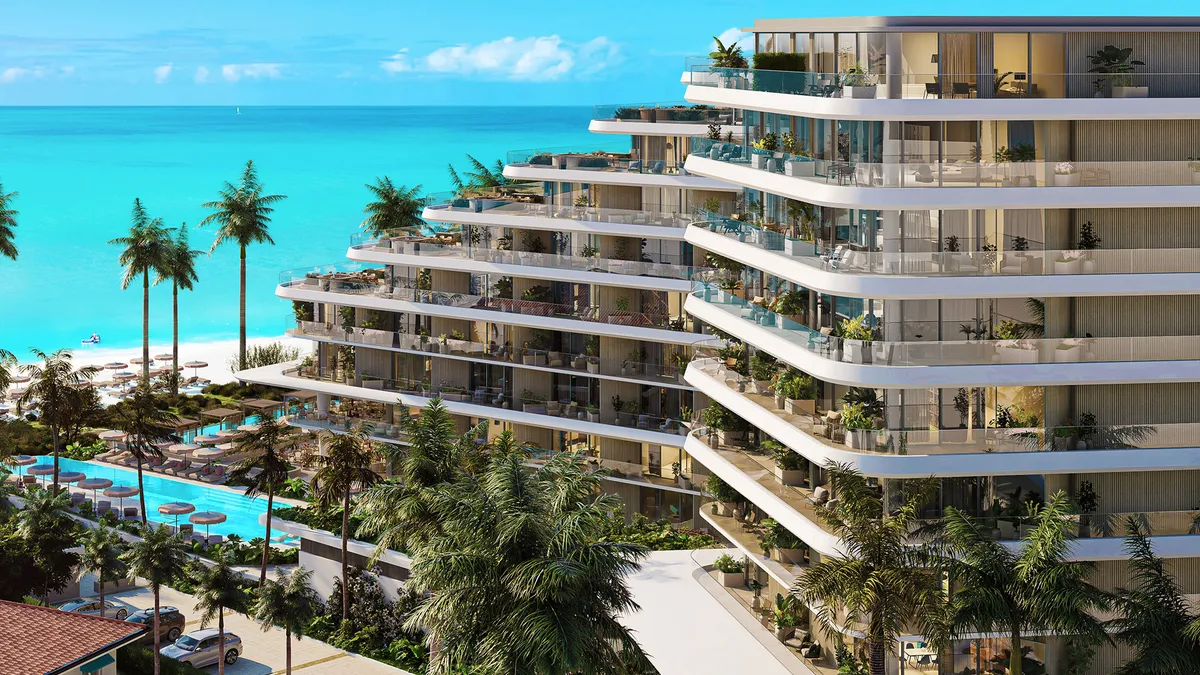
Compare Beachfront Resort Plans: The 2026 Engineering Reference
The architectural orchestration of a beachfront resort is a multi-dimensional challenge that extends far beyond the aesthetic arrangement of villas and pools. In the contemporary era, such projects are governed by a complex intersection of coastal geomorphology, climate resilience, and the fluctuating psychology of high-end leisure. A master plan for a beachfront property is essentially a blueprint for a self-sustaining ecosystem that must negotiate a permanent truce between the corrosive power of the ocean and the delicate requirements of luxury habitation. To evaluate these assets, one must look past the “view” and analyze the “metabolism” of the structure—how it breathes, how it handles waste, and how it resists the inevitable entropy of salt air.
As land-use regulations tighten globally and the “retreating coastline” becomes a structural reality rather than a speculative risk, the strategies employed in coastal hospitality are shifting toward “dynamic permanence.” This involves moving away from static seawalls and toward bio-integrative designs that allow water to move through or under structures without compromising their integrity. For travelers, investors, and architects, the primary objective is no longer merely to occupy a shore, but to curate an environment that remains viable over a fifty-year horizon despite escalating environmental volatility.
This editorial audit serves as a comprehensive reference for the systemic logic required to identify and execute high-fidelity coastal projects. It deconstructs the metabolic functions of a resort—its energy loops, salt-spray mitigation, and social flow—while analyzing the mechanical and legal frameworks that define the current industry standard. By examining the layers of planning that exist beneath the surface of a polished rendering, we can establish a professional benchmark for what constitutes an authoritative asset in the competitive landscape of maritime real estate.
Understanding “compare beachfront resort plans”

To effectively compare beachfront resort plans, one must first dismantle the oversimplification that these are merely site layouts or high-amenity hotels. In a professional architectural and operational context, a beachfront plan is a “Temporal Agreement” between the built environment and the shoreline. A common misunderstanding among stakeholders is prioritizing “proximity to the surf” as the primary value driver. While proximity generates initial premiums, the actual value of a plan is determined by its “Hydraulic Buffer Capacity”—the ability to withstand a storm surge without requiring a total mechanical overhaul or experiencing catastrophic soil scour.
A second perspective involves the “Psychogeography of Flow.” The most successful resorts do not just place buildings; they manage the transition between the vast, chaotic energy of the ocean and the controlled, intimate spaces of a suite. This requires a sophisticated understanding of “Acoustic Shielding” and “Salt Spray Mitigation.” If a guest cannot sleep because of the rhythmic roar of the surf, or if the view is constantly obscured by salt-crusted glass, the resort has failed its primary hospitality function. The elite tier of plans utilizes prevailing wind patterns to naturally ventilate common areas while creating sheltered micro-climates for outdoor lounging that are protected from the “sand-blast” effect of coastal gusts.
Furthermore, we must account for “Utility Sovereignty.” Many of the world’s most desirable beachfront locations are remote or have fragile municipal infrastructure. Therefore, the most advanced plans are effectively off-grid life-support systems. They incorporate decentralized desalination, anaerobic waste processing, and solar-hydrogen storage. When you compare beachfront resort plans, the “Metabolic Efficiency” of the design—how much energy it consumes per guest-night—is as critical a metric as the square footage of the master suite or the quality of the sand.
Historical and Systemic Evolution of Coastal Planning
The history of beachfront development in the 20th century was largely defined by “Static Defense.” From the grand hotels of the French Riviera to the high-rises of Miami, the strategy was to draw a line in the sand and defend it with concrete. The ‘Hard Seawall’ model defined this era, triggering unintended downstream erosion that destroyed the very beach the resort intended to celebrate. Developers misinterpreted the ocean as a static backdrop rather than a kinetic force. This rigid engineering accelerated coastal degradation, compromising the asset’s environmental sovereignty and erasing its primary aesthetic value.
The transition toward “Fluid Resilience” began in the late 1990s as the limitations of hard engineering became apparent. Planners began to experiment with “Setback Buffers” and “Sacrificial Landscapes.” Resort planners abandoned the water’s edge to engineer a buffer of dunes and wetlands that absorb wave energy. This strategy shifts the architectural focus from the ‘Front-Row View’ to a ‘Terraced Perspective.’ Designers deploy elevation to secure sightlines while positioning the buildings safely inland. Natural berms protect the core infrastructure, neutralizing the kinetic threat of the sea.
In 2026, we are entering the era of “Amphibious and Buoyant Assets.” High-end coastal projects increasingly incorporate structures that rise with the tide or relocate with ease. The ‘Adaptive Campus’ replaces the ‘Static Resort’ by treating the relationship between land and water as a spectrum rather than a binary border. This architectural evolution secures the property’s longevity by aligning its footprint with the shifting coastal shelf. This evolution reflects a broader shift in our relationship with the ocean—moving from a posture of conquest to one of coexistence, where the “best” plans are those that can disappear into the landscape during a storm and emerge intact.
Conceptual Frameworks and Mental Models
Navigating the complexity of coastal development requires a specific set of mental models to avoid common planning traps and logistical failures.
1. The “Velocity Zone” Framework
This model categorizes site areas based on wave energy. The “V-Zone” is where wave action is high; the “A-Zone” is subject to flooding but lhas ower energy. Top-tier plans never place critical infrastructure—generators, server rooms, central kitchens—in the V-Zone. Instead, these areas are reserved for “Low-CAPEX” amenities like beach bars or volleyball courts that can be sacrificed in a major event.
2. The “Biophilic Permeability” Model
This framework posits that the most resilient landscape is one that water can pass through, not bounce off. Instead of creating a solid barrier, planners use pier-foundation systems that elevate structures, allowing the sand and tide to move naturally underneath. This reduces the “Scour Effect” that eventually undermines traditional concrete foundations.
3. The “Service-to-Guest Entropic Link”.
In a beachfront environment, entropy—the tendency toward disorder—is accelerated by salt and humidity. This model dictates that for every meter closer a building is to the shore, the maintenance budget must increase by a specific coefficient ($k$). Professional analysts compare beachfront resort plans by using this to determine the optimal “Economic Setback” where the view premium still outweighs the maintenance tax.
Key Categories of Resort Variations and Trade-offs
Coastal projects are rarely “one-size-fits-all.” The geography dictates the structural logic and the guest experience.
| Category | Primary Environment | Structural Logic | Major Trade-off |
| Elevated Pier-Resorts | Mangroves / Tidal Flats | Vertical elevation on piles | High plumbing complexity; limited ground-floor use |
| Dune-Integrated Villas | High-energy Atlantic/Pacific | Submerged/Buried structures | Massive waterproofing costs; limited natural light |
| Inland-Lagoon Hubs | Caribbean / Southeast Asia | Creating an artificial inner coast | High environmental impact; requires constant dredging |
| Cliff-Hanging Estates | Mediterranean / California | Cantilevered engineering | Extreme seismic risk; difficult accessibility |
| Atoll-Ring Developments | Indian Ocean / Maldives | Overwater-centric platforms | Vulnerability to sea-level rise; waste-logistics tax |
Decision Logic: When choosing a design, the “Soil Stability-to-Storm Surge” ratio is the primary filter. A cliff-side resort may offer superior storm surge protection but faces catastrophic failure in a landslide, whereas an overwater villa avoids landslides but faces existential risk from a single Category 5 hurricane.
Detailed Real-World Scenarios
The “Salt-Mist” Electrical Failure
A luxury resort in a high-wind tropical zone experienced systemic failures of its outdoor lighting and HVAC units within 12 months of opening.
-
The Flaw: The developer chose “coastal-grade” components but failed to account for “Venturi Effects” that accelerated salt-mist into equipment housings located in wind tunnels between buildings.
-
The Resolution: The master plan was retrofitted with “Acoustic and Salt Baffles”—physical landscaping barriers that broke the wind velocity before it reached the mechanical cores.
The “Dune-Migration” Blockage
A resort designed around a pristine dune system found its primary walkways and infinity pools buried under two feet of sand after a seasonal wind shift.
-
The Flaw: The plan treated the dunes as a static aesthetic feature rather than a mobile geological system.
-
The Resolution: Planners implemented “Elevated Boardwalks” with gaps that allow sand to blow through, maintaining the natural topography without obstructing guest flow.
The “Tidal-Lock” Waste Crisis
An overwater bungalow resort faced a sanitation crisis when its gravity-fed sewage lines were back-pressured by an uncharacteristically high “King Tide.”
-
The Flaw: The vertical elevation of the bungalows was calculated based on 20th-century tidal averages that did not account for the 2026 sea-level baseline.
-
The Resolution: The resort transitioned to a vacuum-sewer system, which operates independently of gravity and remains functional even during high-water events.
Planning, Cost, and Resource Dynamics
The “Maintenance Tax” on beachfront property is non-negotiable. In 2026, the direct and indirect costs of coastal maintenance are the primary drivers of long-term profitability.
Range-Based Operational Estimation (Annual)
| Expense Tier | Cost per Key (Est.) | Primary Driver | Technical Expertise |
| Atmospheric Shielding | $3,500 – $7,500 | Salt-wash labor; UV-coatings | Specialized Finishes |
| Foundation Monitoring | $5,000 – $12,500 | Sonar-scanning; pile integrity | Marine Engineering |
| Utility Sovereignty | $8,500 – $16,000 | RO-membrane swaps; battery cycles | Systems Engineer |
Opportunity Cost: Choosing a “Front-Row” villa option over a “Setback” option may increase room rates by 20%, but it increases the lifecycle replacement cost of all exterior materials by 300%. The “Topical Authority” in selecting the right plan lies in finding the inflection point where guest desire and mechanical reality intersect without bankrupting the operator in year five.
Tools, Strategies, and Support Systems
To maintain a high-fidelity beachfront asset, several critical systems must be integrated into the initial plan:
-
LiDAR Coastal Mapping: High-resolution topographical data used to predict exactly how water will flow over a site during a 100-year storm.
-
Sacrificial Landscapes: The use of salt-tolerant vegetation (halophytes) that can be destroyed by a surge and regrow rapidly, protecting the underlying soil from erosion.
-
Marine-Grade 316 Stainless Steel: The absolute minimum standard for any structural hardware. Using 304-grade in a beachfront environment is a “deferred failure.”
-
Desalination (RO) Micro-Grids: Allowing the resort to produce fresh water on-site while returning brine to the ocean in a way that doesn’t disrupt local reefs.
-
Smart-Shading Fins: Automated louvers that adjust to wind speed and solar angle, reducing HVAC load by up to 40% in tropical climates.
-
Vacuum-Sewage Systems: Critical for overwater or low-elevation resorts to prevent seawater backflow into the sanitation system.
-
Dynamic Mooring: For buoyant components, systems that allow piers and villas to rise 5+ meters without detaching from utility lines.
-
Thermal Imaging Drones: Used for quarterly inspections of the building envelope to detect hidden moisture ingress before mold becomes systemic.
Risk Landscape and Failure Modes
The primary risk in beachfront planning is “Linear Thinking”—assuming that tomorrow’s weather will look like yesterday’s.
-
The “Compounding Surge”: When a storm surge coincides with a high tide and heavy inland rainfall, the resulting “Total Water Level” (TWL) often exceeds all historical models.
-
Galvanic Corrosion: In high-salinity environments, different metals touching each other can create a small electrical current that dissolves the weaker metal. This is a common cause of “Invisible Structural Failure” in coastal balconies.
-
The “Insurance Retreat”: A plan may be technically sound but economically unviable if major insurers refuse to cover the region. Top-tier developers compare beachfront resort plans by including “Reinsurance Portfolios” that demonstrate resilience to underwriters.
Governance, Maintenance, and Long-Term Adaptation
Coastal assets require “Naval Discipline.” They are not “Set-and-Forget” real estate. A resort that ignores its “metabolic” health for a single season will face exponential repair costs.
-
Monitoring: Daily salt-wash cycles for all exterior glass and aluminum; weekly checks of foundation piles for “scour” or marine-borer damage.
-
Adjustment Triggers: If beach erosion exceeds 1.5 meters in a single year, a “Beach Nourishment” or “Managed Retreat” protocol is automatically triggered.
-
Layered Maintenance Checklist:
-
Daily: Rinse all salt-exposed HVAC condensers with fresh water.
-
Monthly: Function test of storm shutters and backup utility micro-grids.
-
Annual: Full “Structural Integrity Audit” including underwater sonar of all marine foundations.
-
Measurement, Tracking, and Evaluation
How do we evaluate the success of a plan? It goes beyond the initial sales velocity or Instagram-ability.
-
Leading Indicator: “Mean Time to Corrosion” (MTTC) for exposed metal fixtures. If fixtures are pitting in under six months, the resort’s wind-shielding logic is flawed.
-
Lagging Indicator: “Post-Storm Recovery Time.” A superior plan is one where the property can be back at 100% capacity within 72 hours of a major storm event.
-
Qualitative Signal: Guest feedback regarding “Acoustic Fatigue.” High-quality options result in guests feeling energized by the ocean, not exhausted by its constant noise and humidity.
Common Misconceptions and Oversimplifications
-
Myth: “Concrete is the most durable coastal material.” Correction: Traditional concrete is porous; saltwater reaches the rebar, causing “Concrete Cancer.” Top resorts use high-density GRC (Glass-Reinforced Concrete).
-
Myth: “Natural dunes block the ocean view.” Correction: Smart design terraces and stabilizes dunes with integrated boardwalks to create a superior aesthetic “Frame” for the horizon. These living barriers provide essential storm protection while enhancing the property’s visual value. By integrating the dune into the architecture, the developer secures both the view and the shoreline’s physical sovereignty.
-
Myth: “Modern glass can withstand anything.” Correction: While impact-resistant glass is strong, the frames are the weak point. When a frame flexes by even 1%, it shatters the hermetic seal and invites salt-air to consume the interior. This minute structural failure triggers immediate oxidation, stripping the protection from luxury finishes. By tolerating zero-flex engineering, the developer secures the asset’s internal sovereignty and prevents the sea from invading the guest’s sanctuary.
-
Myth: “Seawalls are a permanent solution.” Correction: Seawalls are a “Time-Buying Strategy.” They eventually cause the beach in front of them to disappear, leading to a long-term loss in property value.
Conclusion
The architecture of the coast is a discipline of humility. When we compare beachfront resort plans, we are essentially looking for those that acknowledge the ocean as the senior partner in the development. By moving from static defense to dynamic resilience, developers can create assets that are not only profitable in the short term but resilient over decades of environmental change. In this field, the silence of the maintenance crew and the seamlessness of the guest experience define success. Operators attain this harmony only through a deep, analytical understanding of the metabolic and hydraulic forces that drive the marine environment. This mastery secures the guest’s peace of mind by neutralizing the mechanical friction of the sea. A beachfront resort is not a building; it is a sustained performance of engineering and environmental stewardship.