Luxury Oceanfront Hotels USA: The 2026 Editorial Pillar
The concept of the American oceanfront has shifted from a mere geographic boundary to a sophisticated industrial and cultural asset. While the United States possesses thousands of miles of coastline, the subset of that land capable of supporting a truly high-tier hospitality infrastructure is remarkably small. This scarcity is driven by a convergence of strict environmental zoning, the physical reality of coastal erosion, and the extreme capital requirements necessary to maintain luxury standards in a corrosive, salt-air environment. Consequently, the premier tier of coastal accommodation is defined as much by its engineering and legal “moat” as it is by its aesthetic appeal.
In the contemporary market, the distinction between “beachfront” and “oceanfront” has become a critical point of editorial clarification. Oceanfront implies a direct, unobstructed orientation toward the sea, but it does not always guarantee sand access; many of the nation’s most exclusive properties are perched on granite cliffs or volcanic bluffs where the experience is one of dramatic vista rather than littoral immersion. Conversely, true beachfront properties must manage the logistical complexities of public-use laws and “mean high tide” boundaries, which vary significantly from California to Florida. A guest’s satisfaction is often determined by their understanding of these spatial dynamics before they ever set foot in a lobby.
This audit deconstructs the systemic architecture of the high-end coastal market. We will explore the historical transition from the Gilded Age “Grand Hotels” to the modern “Ecological Sanctuaries” that prioritize biophilic design and carbon neutrality. By applying mental models such as the “Acoustic Shadow” and “Service-to-Guest Ratios,” we can evaluate these properties not as vacation spots, but as complex operational environments. The goal is to provide a definitive reference for those who view travel as a strategic allocation of time and capital, ensuring that the “Oceanfront” remains a site of genuine restoration rather than logistical friction.
Understanding “luxury oceanfront hotels usa”
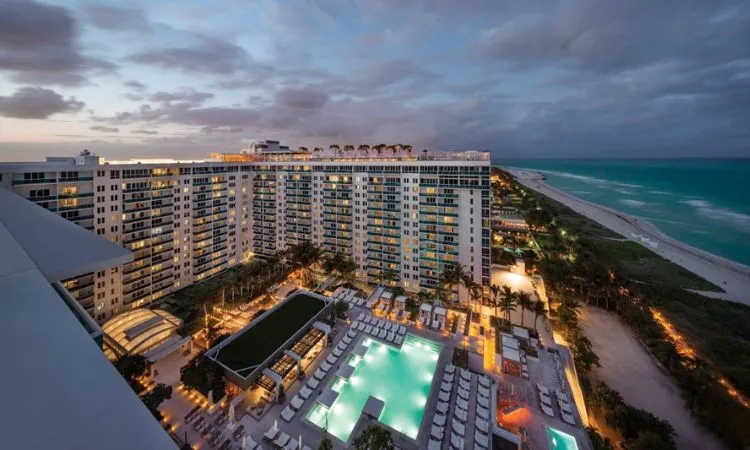
To master the selection of luxury oceanfront hotels usa, one must first navigate the “Illusion of Proximity.” A frequent misunderstanding in the travel sector is that any property with a coastal address provides a seamless connection to the water. In high-density regions like Miami Beach or Southern California, “oceanfront” properties are often separated from the actual shoreline by public boardwalks, secondary dunes, or municipal infrastructure. This creates a “Visual-Tactile Gap”—you can see the water, but reaching it requires navigating a gauntlet of public traffic. A flagship property resolves this through “Hard-Asset Integrity,” where the transition from private terrace to sand is immediate and controlled.
From a multi-perspective view, the “Luxury” component of these hotels is an ongoing battle against “Atmospheric Degradation.” The same salt spray that provides the sensory appeal of a sea breeze is an aggressive corrosive agent that attacks HVAC systems, fenestration, and structural steel. Therefore, a luxury property is not just defined by its thread count, but by its “Capital Improvement Schedule.” If a hotel has not undergone a “Hard-Surface Refresh” within the last five to seven years, the salt-air environment will have likely compromised the “Tactical Quality” of the room—manifesting as stuck sliding doors, foggy glass, or metallic odors.
Furthermore, we must address the “Zoning Ceiling.” Because many of the most desirable coastal plots are now protected by the Coastal Zone Management Act (CZMA) or state-level equivalents like the California Coastal Commission, the supply of new luxury oceanfront hotels usa is effectively capped. This leads to a market dominated by “Legacy Assets.” The sophisticated traveler must distinguish between a hotel that is “Grand” because of its historical maintenance and one that is simply “Old” and trading on a location it could never secure under modern environmental laws.
Historical and Systemic Evolution of the Coastal Retreat
The American coastal hotel began as a “Climatic Necessity.” In the mid-19th century, the “Grand Hotel” era was born from the belief that sea air possessed curative properties for respiratory ailments. Properties like The Hotel del Coronado (1888) functioned as self-contained ecosystems for the social elite. While these architectural marvels dominated the shoreline, they remained ‘Passive Environments’—structures that merely sat by the sea without integrating the water into the guest experience beyond a static view.
The mid-20th century introduced the “Aviation Pivot.” As jet travel became accessible, the geographic monopoly of the East Coast barrier islands was broken. This era saw the rise of “Engineered Leisure” in Florida and Hawaii, where developers like Chris Hemmeter created “Mega-Resorts” that featured artificial lagoons and massive pool complexes. The ocean was relegated to a secondary role, serving as a backdrop for a more controlled, manufactured aquatic experience. The hotel became a “Theme Park for Adults,” emphasizing scale over intimacy.
By 2026, we will have entered the era of “Biophilic Integration.” The modern flagship property is no longer a monolith on the sand; it is an “Adaptive Structure” that works with the local ecosystem. We see a shift toward “Restorative Luxury,” where the hotel’s value is tied to its stewardship of the surrounding reef or dune system. The luxury traveler now seeks “Geographic Specificity”—an experience that could only happen in that specific cove in Big Sur or on that specific stretch of the Outer Banks.
Conceptual Frameworks and Mental Models
Authoritative hospitality selection requires frameworks that strip away the marketing “Hype.”
1. The “Acoustic Shadow” Model
Sound travels differently over water than over land. Because water is a dense, flat surface, it reflects low-frequency sound (like construction or nearby traffic) with minimal attenuation. Architects must evaluate a premier hotel by its ‘Acoustic Shielding.’ A ‘U-shaped’ property that opens toward the ocean acts as a parabolic reflector, trapping and amplifying the sound of the waves. While many desire this, a ‘Break’ located too close to the structure can generate decibel levels that prevent deep sleep. The “Ideal” model is a property with enough “Dune Depth” to provide a natural muffle.
2. The “Littoral Rights” Framework
Beach ownership in the United States functions as a patchwork of the ‘Public Trust Doctrine’ and private deeds. Hawaii, for instance, mandates that all beaches remain public up to the ‘upper reaches of the wash of the waves.’ Conversely, certain jurisdictions in Florida allow hotels to maintain private ownership of the dry sand. Understanding this determines the “Privacy Ceiling” of a hotel. A luxury hotel in a “Public Beach” state must compensate through “Service Density”—providing a level of on-sand attention that creates a “Psychological Barrier” between the guest and the public.
3. The “RevPAR-to-Staff” Ratio
Revenue Per Available Room (RevPAR) is a standard metric, but for the guest, the “Service-to-Guest” (StG) ratio is more telling. A luxury oceanfront flagship should maintain a ratio of at least 1:2.5. If the beach club has 200 chairs but only 4 attendants, the “Operational Integrity” has failed, regardless of how many stars the property has on its marquee.
Key Categories of Oceanfront Hospitality and Trade-offs
The US market is segmented into several “Tactical Environments,” each with a specific trade-off.
| Category | Typical Location | Aesthetic Priority | Core Trade-off |
| The Historic Grand | Coronado, CA; Palm Beach, FL | Heritage & Scale | Architectural charm vs. Modern tech/plumbing |
| The Cliffside Enclave | Big Sur, CA; Newport, RI | Dramatic Vistas | Visual awe vs. Direct water access |
| The Dune Sanctuary | Outer Banks, NC; Hamptons | Privacy & Nature | Total seclusion vs. Proximity to dining/urbanity |
| The Tropical High-Rise | Miami Beach; Waikiki | Modernity & Energy | 24/7 service/amenities vs. High density/noise |
| The Barrier Island Hub | Sea Island, GA; Kiawah, SC | Lowcountry Elegance | Family-friendly vs. Extreme seasonal pricing |
Decision Logic: If the priority is “Acoustic Purity,” one should avoid the “Tropical High-Rise” during peak spring-break windows. If the priority is “Multi-Generational Stability,” the “Barrier Island Hub” offers the best infrastructure for children and elderly guests, though it sacrifices the “Remote” feel of a “Cliffside Enclave.”
Detailed Real-World Scenarios
The “Erosion Debt”
A traveler books a “Beachfront Suite” in a Florida property during hurricane season.
-
The Reality: A minor offshore storm has caused a “Scarping” event, where the beach has been washed away, leaving a four-foot drop-off between the hotel pool and the water.
-
Failure Mode: The hotel is still “Oceanfront,” but it is no longer “Beachfront.”
-
Resolution: Strategic hotels maintain a “Beach Nourishment” fund and can restore the sand within 48 hours. The traveler should verify if the property has active coastal permits for sand replacement.
The “Waikiki Crowding” Paradox
A guest stays at a flagship hotel in Oahu, expecting seclusion because of the price point.
-
The Reality: Because Hawaiian law mandates public access, the “private” beach is crowded with surf-school participants.
-
The Strategy: The hotel utilizes “Elevated Decking”—terraces that are physically higher than the public sand, allowing for a visual connection to the ocean without the tactile intrusion of the crowd.
The “Big Sur” Isolation
A traveler seeks the ultimate California oceanfront experience.
-
The Constraint: Properties like Post Ranch Inn or Ventana are oceanfront but sit 1,200 feet above the water.
-
The Outcome: The “Sea Mist” creates a persistent morning fog (The “Marine Layer”) that obscures the view until 2:00 PM.
-
Resolution: An authoritative plan schedules outdoor “Vista” activities for the afternoon, using the foggy mornings for spa or interior-focused restorative work.
Planning, Cost, and Resource Dynamics
The “Economic Architecture” of an oceanfront stay is significantly different from urban luxury.
Range-Based Resource Estimation (7-Day Stay, 2 Adults)
| Tier | Estimated Total Spend | Cost Per Linear Foot of View | Operational Driver |
| Upper-Tier Premium | $6,000 – $9,000 | Low | Volume/Conferences |
| Luxury Flagship | $12,000 – $22,000 | Moderate | Service Density/Brand |
| Ultra-Exclusive | $35,000+ | High | Scarcity/Privacy |
While travelers focus on the room rate as the ‘Direct Cost,’ the ‘Logistical Drag’ represents the true ‘Indirect Cost’ of an oceanfront stay. Remote enclaves transform you into a ‘Captured Consumer,’ where the property’s ecosystem dictates dining and transport options, often imposing a standard 300% markup on F&B. Managing this involves a “Hybrid Provisioning” strategy: using the hotel for the “Primary Experience” but sourcing secondary needs from local municipal hubs.
Tools, Strategies, and Support Systems
Authoritative management of a coastal stay requires these “Market Defenses”:
-
Bathymetry Maps: Use these to see if the beach has a “Steep Drop” (better for dramatic waves) or a “Long Shallow” (better for swimming/safety).
-
NOAA Tide Tables: Essential for properties in the Carolinas or Georgia, where a “High Tide” can eliminate the entire beach for four hours a day.
-
“Incognito” Satellite Audits: Use Google Earth to check for “Recent Construction” on adjacent lots. Many hotels will not disclose a neighboring 20-story crane.
-
Preferred Partner Programs: Utilizing Virtuoso or FHR (Fine Hotels + Resorts) often provides a “Room Upgrade at Check-in,” which in an oceanfront hotel is the difference between a “Garden View” and a “Full Ocean View”—a value delta of $300+/night.
-
Windy.com: To track “Onshore Winds.” An onshore wind brings in cooler air but also brings in “Sargassum” (seaweed) and jellyfish.
-
The “Concierge Direct” Call: Ask specifically: “If I stand on my balcony, can I see the actual break of the waves, or just the horizon?” This clarifies the “Partial View” ambiguity.
-
Resort-Fee Audits: Many luxury oceanfront hotels usa charge a $50-$100 “Resort Fee.” Verify if this includes “Beach Setup” (chairs/umbrellas). If not, you are facing an additional $150/day “Access Tax.”
Risk Landscape: Taxonomy of Compounding Hazards
An oceanfront stay is subject to “Environmental Volatility” that does not exist in urban settings.
-
Atmospheric Hazard: The “Marine Layer” can reduce visibility to 20 feet for days on end, effectively negating the “View Premium” you paid for.
-
Biological Hazard: “Red Tide” (Algal blooms) can make the air irritating to the lungs and the water dangerous for swimming, a risk that peak-summer Florida travelers must quantify.
-
Logistical Hazard: Coastal roads (like PCH in California or A1A in Florida) are prone to “Single-Point Failures.” A mudslide or a bridge repair can turn a 20-minute transfer into a 4-hour detour.
Governance, Maintenance, and Long-Term Adaptation
A “Generational Asset” in the hospitality world manages its “Lifecycle” with precision.
-
The “Seven-Year Itch”: A premier hotel must undergo a full “Hard-Goods” renovation every 7 years. When evaluating a property, ask for the date of the last “Full Room Renovation.” If it was more than 8 years ago, the salt-air degradation will be visible in the “Soft Finishes.”
-
Ecological Stewardship: Does the hotel use “Turtle-Friendly” lighting? Do they participate in “Oyster Reef” restoration? In 2026, “Luxury” is increasingly defined by the hotel’s ability to protect the asset that makes it valuable.
-
The “Service Continuity” Metric: High staff turnover is the “Lagging Indicator” of a failing hotel. A flagship property is one where the “Beach Captain” or “Lead Concierge” has been in place for a decade.
Measurement, Tracking, and Evaluation
How do you determine if a hotel is truly a “Luxury Oceanfront” flagship?
-
The “Acoustic Floor”: At 2:00 AM, with the balcony door closed, can you hear the waves? If not, the glazing is superior. If you can hear the highway, the “Oceanfront” status is a logistical compromise.
-
The “Sand Clearance” Time: From the moment you leave your room, how many minutes does it take to have your feet in the sand? At a flagship, this should be under 5 minutes.
-
The “Recovery” Test: When a coastal event (like a storm) disrupts the stay, how “Empowered” is the staff to provide alternative restorative experiences?
Common Misconceptions and Oversimplifications
-
Myth: “Oceanfront is always better than Ocean View.” Correction: An “Oceanfront” room on the 1st floor might have its view blocked by a sea wall or a dune. An “Ocean View” room on the 10th floor might have a panoramic 180-degree vista.
-
Myth: “The water is always swimmable.” Correction: Many of the luxury oceanfront hotels usa in Northern California or the Pacific Northwest are “Visual Only.” The water is 55°F, and the currents are lethal.
-
Myth: “Private Beaches are truly private.” Correction: In almost every US state, the “Wet Sand” belongs to the public. You are paying for the “Dry Sand” exclusivity and the service that comes with it.
-
Myth: “Summer is the best time for the beach.” Correction: In the Southeast, summer is “Hurricane Season” and “Humidity Peak.” “Shoulder Seasons” (May and October) often provide better “Atmospheric Clarity” and lower prices.
Conclusion
The pursuit of the perfect coastal stay is a search for “Atmospheric Harmony.” To master the selection of luxury oceanfront hotels usa is to acknowledge that the sea is an indifferent and aggressive neighbor, and only through extreme operational discipline can a hotel turn that environment into a site of luxury. Success lies in the ‘Buffer Zones’—the critical space between public and private, salt and steel, noise and silence. Applying a logistical lens to your travel planning ensures the oceanfront remains a profound, unobstructed frontier for the human spirit.