Best Beachfront Resort for Weddings: The 2026 Engineering Guide
The architecture of a destination wedding is a complex negotiation between the romantic ideal of a coastal horizon and the brutal mechanical realities of marine environments. In the contemporary hospitality landscape, selecting a venue is no longer a matter of aesthetic preference alone; it is an exercise in assessing the structural integrity, logistical resilience, and atmospheric management of a seaside asset. A beachfront resort functions as a high-stakes theater where the “front-of-house” luxury must be supported by a sophisticated “back-of-house” engineering core capable of mitigating salt-mist corrosion, unpredictable wind shear, and the fluctuating geomorphology of the shoreline.
As global travel becomes more sensitive to environmental volatility, the definition of a premier wedding venue has shifted. It is no longer sufficient for a property to offer a picturesque stretch of sand. The modern standard requires “Dynamic Permanence”—the ability of a resort to maintain a high-fidelity guest experience while actively managing the retreating coastline and intensifying weather patterns. For the stakeholders involved, from the couple to the professional planner, the objective is to find a site where the metabolic functions of the resort—its power stability, water desalination, and culinary logistics—are invisible but infallible.
This editorial audit serves as a definitive reference for the systemic logic required to evaluate and execute high-fidelity weddings in coastal environments. It deconstructs the operational layers that define a superior venue, moving beyond the superficial “view” to analyze the underlying frameworks of “Hydraulic Buffer Capacity” and “Acoustic Shielding.” By examining the intersection of luxury hospitality and coastal engineering, we can establish a professional benchmark for what constitutes an authoritative choice in the competitive landscape of maritime celebrations.
Understanding “best beachfront resort for weddings”
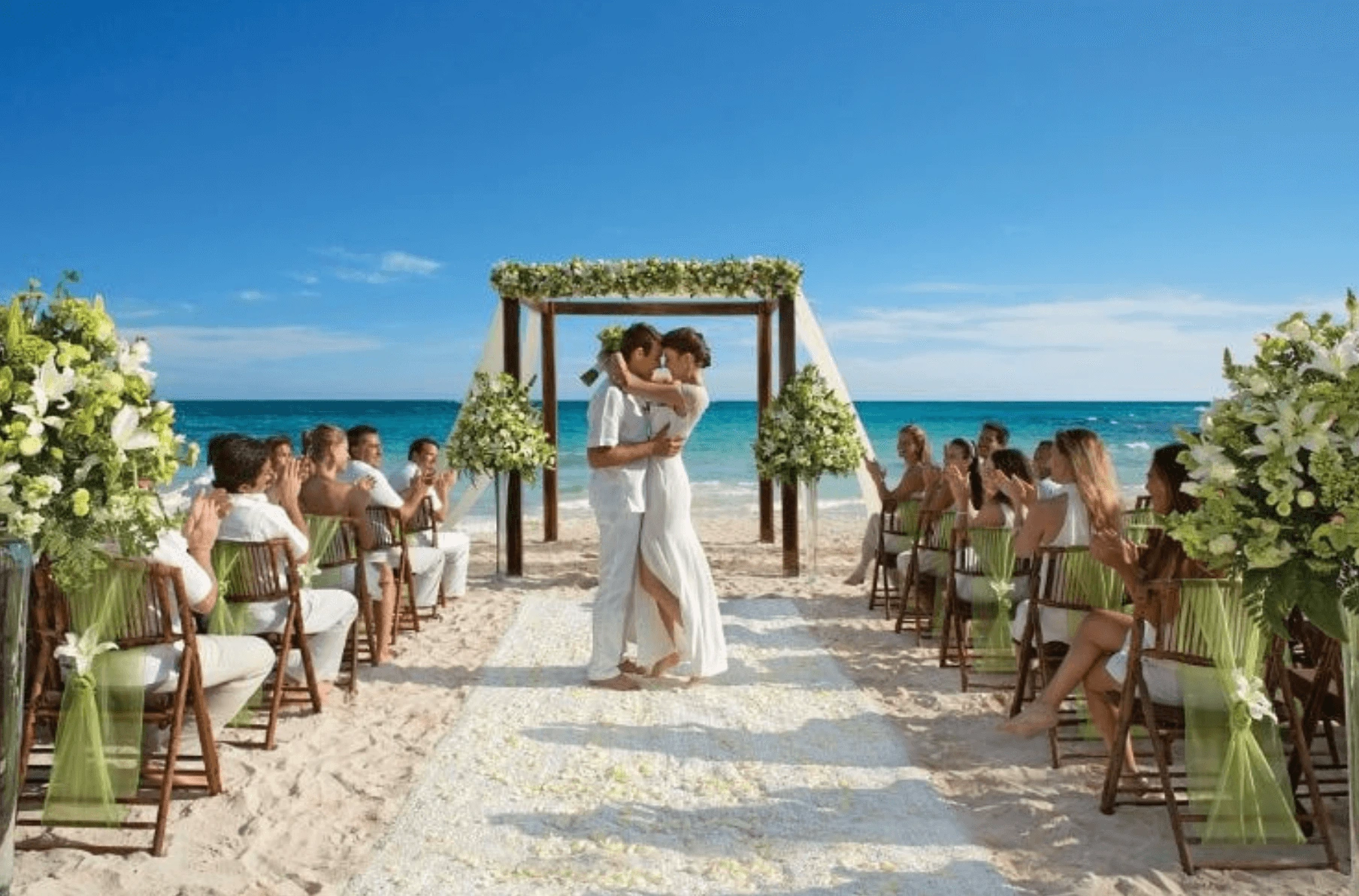
To engage with the concept of the best beachfront resort for weddings, one must first dismantle the oversimplification that these are merely scenic backdrops for photography. In a professional architectural and operational context, a wedding-capable beachfront plan is a “Temporal Agreement” between the built environment and the shoreline. A common misunderstanding among stakeholders is prioritizing “proximity to the surf” as the primary value driver. While proximity generates initial visual premiums, the actual value of a venue is determined by its “Atmospheric Control Capacity”—the ability to protect a delicate event from the corrosive and disruptive power of the ocean.
A second perspective involves the “Psychogeography of Flow.” The most successful resorts do not just place a canopy on the sand; they manage the transition between the vast, chaotic energy of the ocean and the controlled, intimate spaces required for a ceremony. This involves a sophisticated understanding of “Acoustic Shielding.” If the rhythmic roar of the surf exceeds 65 decibels, it will mask the human voice and the subtleties of live music, effectively degrading the core communicative function of a wedding. The elite tier of venues utilizes natural topography—dunes, sea grapes, or engineered berms—to create acoustic pockets of clarity without obstructing the horizon.
Furthermore, we must account for “Utility Sovereignty.” Many of the world’s most desirable coastal locations are remote or subject to fragile municipal grids. Therefore, the most advanced resorts are effectively off-grid life-support systems. They incorporate decentralized desalination, anaerobic waste processing, and solar-hydrogen storage to ensure that a localized power surge or water shortage does not derail a high-density event. When evaluating these projects, the “Metabolic Efficiency” of the resort—how it handles the sudden resource spike of 200 guests arriving simultaneously—is as critical a metric as the quality of the bridal suite.
Historical and Systemic Evolution of Coastal Celebrations
The history of beachfront weddings in the 20th century was largely defined by “Static Defense.” From the grand hotels of the French Riviera to the high-rises of Miami, the strategy was to draw a line in the sand and defend it with concrete. In this era, weddings were often held on manicured lawns separated from the beach by a seawall. The ocean was a visual asset but an operational adversary. This led to a “clash of textures,” where formal attire met the harsh, unyielding engineering of the coast.
The transition toward “Bio-Integrative Resilience” began in the late 1990s as the limitations of hard engineering became apparent. Planners began to experiment with “Setback Buffers” and “Sacrificial Landscapes.” Resorts were designed with a series of dunes and wetlands that could absorb wave energy, allowing for wedding pavilions to be nestled within natural vegetation. This shifted the architectural focus from the “Front-Row View” to a “Terraced Perspective,” where height was used to provide sightlines while the ceremony itself remained sheltered from the wind.
In 2026, we are entering the era of “Amphibious Assets.” High-end coastal projects are increasingly incorporating structures that can rise with the tide or be easily relocated. The “Static Venue” is being replaced by the “Adaptive Campus,” where the relationship between land and water is viewed as a spectrum rather than a binary border. This evolution reflects a broader shift in our relationship with the ocean—from one of conquest to one of coexistence—where the most sophisticated wedding venues are those that can disappear into the landscape during a storm and emerge intact for a ceremony forty-eight hours later.
Conceptual Frameworks and Mental Models
Navigating the complexity of coastal celebrations requires specific mental models to avoid common planning traps.
1. The “Velocity Zone” Framework
This model categorizes site areas based on wave energy. The “V-Zone” is where wave action is high; the “A-Zone” is subject to flooding but lhas ower energy. Professional planners never place high-value assets—like the reception dinner or electrical hubs—in the V-Zone. Instead, these areas are reserved for short-duration events like the ceremony, where the “Low-CAPEX” infrastructure (chairs, canopies) can be removed quickly if sea conditions shift.
2. The “Biophilic Permeability” Model
This framework posits that the most resilient landscape is one that water can pass through. Instead of creating a solid barrier, planners use pier-foundation systems and boardwalks that elevate guests, allowing the sand and tide to move naturally underneath. This reduces the “Scour Effect” that eventually undermines traditional concrete foundations and preserves the aesthetic “wildness” that guests desire.
3. The “Service-to-Guest Entropic Link.”
In a beachfront environment, entropy—the tendency toward disorder—is accelerated by salt and humidity. This model dictates that for every meter closer a ceremony is to the shore, the logistical maintenance budget must increase by a specific coefficient ($k$). High-quality resorts use this to determine the optimal “Economic Setback,” ensuring the view premium still outweighs the maintenance “tax” on linens, flowers, and electronics.
Key Categories of Resort Variations and Trade-offs
Coastal projects are rarely “one-size-fits-all.” The geography dictates the structural logic and the wedding experience.
| Category | Primary Environment | Structural Logic | Wedding Trade-off |
| Elevated Pier-Resorts | Mangroves / Tidal Flats | Vertical elevation on piles | Total bug protection; limited sand access |
| Dune-Integrated Hubs | High-energy Atlantic/Pacific | Submerged/Buried structures | Massive wind shielding; high waterproofing cost |
| Atoll-Ring Platforms | Maldives / Indian Ocean | Overwater-centric platforms | 360-degree views; extreme waste logistics |
| Cliff-Hanging Estates | Mediterranean / California | Cantilevered engineering | Absolute privacy; difficult stroller/ADA access |
| Inland-Lagoon Hubs | Caribbean / SE Asia | Artificial inner coast | Guaranteed calm water; lack of “true” horizon |
Decision Logic: When selecting between categories, the “Soil Stability-to-Storm Surge” ratio is the primary filter. A cliff-side resort may offer superior storm surge protection but faces catastrophic failure in a landslide, whereas an atoll platform avoids landslides but faces existential risk from a single Category 4 hurricane.
Detailed Real-World Scenarios
The “Salt-Mist” Audio Failure
A luxury resort in a high-wind tropical zone experienced a systemic failure of its outdoor sound system during a vows exchange.
-
The Flaw: The venue utilized standard “weatherproof” speakers but failed to account for “Venturi Effects” that accelerated salt-mist into equipment housings located in wind tunnels between buildings.
-
The Resolution: The resort retrofitted its “Ceremony Pockets” with physical salt baffles—landscaping barriers that broke wind velocity before it reached the hardware.
The “Dune-Migration” Obstruction
A resort designed around a pristine dune system found its primary wedding walkway buried under two feet of sand after a seasonal wind shift.
-
The Flaw: The plan treated dunes as a static aesthetic feature rather than a mobile geological system.
-
The Resolution: Planners implemented “Elevated Boardwalks” with gaps that allow sand to blow through, maintaining the natural topography without obstructing the bridal processional.
The “Tidal-Lock” Waste Crisis
An overwater bungalow resort faced a sanitation crisis during a high-occupancy wedding weekend when its gravity-fed sewage lines were back-pressured by a “King Tide.”
-
The Flaw: Vertical elevation was calculated based on historical tidal averages that did not account for 2026 sea-level baseline shifts.
-
The Resolution: The resort transitioned to a vacuum-sewer system, which remains functional independently of tidal levels.
Planning, Cost, and Resource Dynamics
The “Maintenance Tax” on beachfront property is non-negotiable. In 2026, the direct and indirect costs of maritime maintenance are the primary drivers of guest pricing for events.
Range-Based Operational Estimation (Annual)
| Expense Tier | Cost per Event (Est.) | Primary Driver | Technical Expertise |
| Atmospheric Shielding | $3,500 – $7,000 | Salt-wash labor; UV-coatings | Specialized Finishes |
| Foundation Monitoring | $5,000 – $12,000 | Sonar-scanning; pile integrity | Marine Engineering |
| Utility Sovereignty | $8,500 – $15,000 | RO-membrane swaps; battery | Systems Engineer |
Opportunity Cost: Choosing a “Front-Row” beach plan over a “Setback” lawn plan increases the room rate by 20%, but it increases the lifecycle replacement cost of all exterior textiles (linens, cushions) by 300%. The authority in selecting the best beachfront resort for weddings lies in finding the inflection point where guest desire and mechanical reality intersect without bankrupting the event budget.
Tools, Strategies, and Support Systems
-
LiDAR Coastal Mapping: High-resolution topographical data used to predict exactly how water and wind will move through a site during an event.
-
Sacrificial Landscapes: The use of salt-tolerant vegetation (halophytes) that can be destroyed by a surge and regrow rapidly, protecting the underlying soil of the ceremony site.
-
Marine-Grade 316 Stainless Steel: The absolute minimum standard for any structural wedding hardware (canopies, railings). Using 304-grade is a “deferred failure.”
-
Desalination (RO) Micro-Grids: Ensuring a constant supply of fresh water for high-density guest counts, even if local infrastructure fails.
-
Smart-Shading Fins: Automated louvers that adjust to wind speed to provide a “wind shadow” for outdoor dining.
-
Vacuum-Sewage Systems: Critical for overwater or low-elevation venues to prevent seawater backflow into the guest facilities.
-
Dynamic Mooring: For buoyant platforms, systems that allow the venue to rise 5+ meters without detaching from utility lines.
-
Thermal Imaging Drones: Used for quarterly inspections of the building envelope to detect moisture ingress in reception halls before mold becomes systemic.
Risk Landscape and Failure Modes
The primary risk in beachfront wedding planning is “Linear Thinking”—assuming that tomorrow’s weather will look like yesterday’s.
-
The “Compounding Surge”: When a storm surge coincides with a high tide and heavy inland rainfall, the resulting “Total Water Level” often exceeds all historical models, making beach-level reception sites unviable.
-
Galvanic Corrosion: In high-salinity environments, different metals touching each other can create a small electrical current that dissolves the weaker metal. This is a common cause of “Invisible Structural Failure” in wedding gazebos.
-
The “Insurance Retreat”: A venue may be technically sound but economically unviable if insurers refuse to cover high-value events in specific coastal zones.
Governance, Maintenance, and Long-Term Adaptation
Coastal assets require “Naval Discipline.” They are not “Set-and-Forget” real estate. A resort that ignores its “metabolic” health for a single season will face exponential repair costs.
-
Monitoring: Daily salt-wash cycles for all exterior glass and hardware; weekly checks of foundation piles for “scour.”
-
Adjustment Triggers: If beach erosion exceeds 1.5 meters in a single year, a “Beach Nourishment” or “Managed Retreat” protocol is automatically triggered for the ceremony site.
-
Layered Maintenance Checklist:
-
Daily: Rinse all salt-exposed HVAC condensers with fresh water to ensure cooling for guest rooms.
-
Monthly: Function test of storm shutters and backup utility micro-grids.
-
Annual: Full structural integrity audit, including underwater sonar of all marine foundations.
-
Measurement, Tracking, and Evaluation
How do we evaluate the success of a beachfront venue? It goes beyond the initial guest reviews.
-
Leading Indicator: “Mean Time to Corrosion” (MTTC) for exposed fixtures. If fixtures are pitting in under six months, the venue’s wind-shielding logic is flawed.
-
Lagging Indicator: “Post-Storm Recovery Time.” A superior resort is one where the wedding facilities can be back at 100% capacity within 72 hours of a major storm event.
- Qualitative Signal: Guest feedback regarding “Acoustic Fatigue.” High-quality options result in guests feeling energized by the ocean, not exhausted by its constant noise and humidity.
Common Misconceptions and Ethical Considerations
-
Myth: “Concrete is the most durable coastal material.” Correction: Traditional concrete is porous; saltwater reaches the rebar, causing “Concrete Cancer.” Top resorts use high-density GRC (Glass-Reinforced Concrete).
-
Myth: “Natural dunes block the view.” Correction: Dunes can be “terraced” and stabilized with boardwalks, providing a superior aesthetic “Frame” for the ceremony while providing essential protection.
-
Myth: “Seawalls are a permanent solution.” Correction: Seawalls are a “Time-Buying Strategy.” They eventually cause the beach in front of them to disappear, leading to a long-term loss in the venue’s primary asset.
Ethical Consideration: The expansion into coastal frontiers must account for “Social Permeability.” When a resort occupies a beachfront for private weddings, it often disrupts traditional access for local communities. The most authoritative venues in 2026 are those that incorporate “Public-Private Corridors,” ens
Conclusion
The architecture of the coast is a discipline of humility. Selecting the best beachfront resort for weddings requires acknowledging the ocean as the senior partner in the development. By moving from static defense to dynamic resilience, developers can create assets that are not only profitable in the short term but resilient over decades of environmental change. Success in this field is measured by the silence of the maintenance crew and the seamlessness of the guest experience—a harmony that can only be achieved through a deep, analytical understanding of the metabolic and hydraulic forces at play. A beachfront resort is not a building; it is a sustained performance of engineering and environmental stewardship.